معرفی
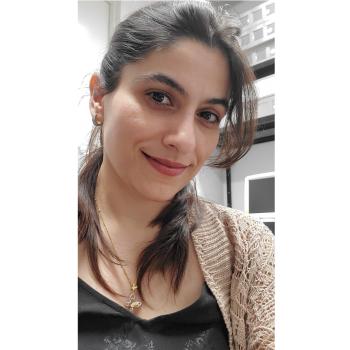
Shirin Pourashraf is a Physical Science Research Scientist at Stanford University's School of Medicine, working within the Department of Radiology's Molecular Imaging and Instrumentations Laboratory (MIIL) under Professor Craig Levin. She leads a challenging Medical Imaging hardware project to build a 16-module partial-ring Time of Flight (TOF)-PET Scanner with 100 ps coincidence time resolution (CTR), focusing on designing compact high-speed and low-noise custom electronic readouts.
- Ph.D. in Electrical Engineering/Mixed-Signal Integrated Circuit (IC) Design from New Mexico State University (2018)
- Master of Science in Electrical Engineering/Microelectronics from Isfahan University Of Technology (2011)
- Bachelor of Science in Electrical Engineering from Shahid Chamran University of Ahvaz (2007)
Dr. Pourashraf's research centers on advancing medical imaging technology, particularly in Time-of-Flight Positron Emission Tomography (TOF-PET) systems. Her work focuses on achieving unprecedented 100 ps coincidence time resolution through innovative electronic readout designs, custom circuit development, and optimization of detector components. Her expertise bridges microelectronics, VLSI design, and medical physics, with particular emphasis on improving signal-to-noise ratio in PET scanners through enhanced timing resolution. Her research has significant implications for cancer detection, as improved CTR can increase the ability to detect and quantify metastatic malignant lesions or reduce scanning times and radiation exposure for patients.
Analysis of Dr. Pourashraf's publications reveals a consistent research trajectory focused on pushing the boundaries of TOF-PET technology. Her work demonstrates expertise in electronic circuit design for radiation detection, with particular emphasis on timing resolution optimization. The publications span medical physics, nuclear instrumentation, and electronics engineering, reflecting the interdisciplinary nature of her work. A notable trend is the progression from fundamental circuit design (earlier publications) toward integrated system development and novel detector configurations (more recent publications), with increasing focus on practical implementation challenges in clinical settings.
- Multiple IEEE NSS/MIC/RTSD Trainee Grants (2019-2024)
- Multiple Stanford Bio-X Travel Awards (2022-2024)
- Stanford Cancer Imaging Training (SCIT) Fellowship; NIH T32 Award (2022-2024)
- Valentin T. Jordanov Radiation Instrumentation Travel Grant (2022)
- NIH Research grants (1R01EB02512501 and 5R01CA21466903, 2019-2024)
- Xilinx University Donation Program equipment grant (2019)
- Outstanding Graduate Assistantship Award from New Mexico State University (2018)
Dr. Pourashraf has secured significant research funding through NIH grants and has been actively involved in the Molecular Imaging and Instrumentations Laboratory at Stanford. Her work involves collaboration with multiple researchers and students, though specific advising relationships aren't detailed in the available information. The laboratory focuses on developing next-generation medical imaging instrumentation with emphasis on time-of-flight PET technology.
As a key member of the Molecular Imaging and Instrumentations Laboratory (MIIL) at Stanford, Dr. Pourashraf contributes to a collaborative research environment focused on advancing medical imaging technology. Her current project involves building a 16-module partial-ring TOF-PET scanner with 100 ps CTR, which represents a significant advancement over current state-of-the-art systems that achieve 225-400 ps CTR. This work has direct implications for improving cancer imaging and detection capabilities.