معرفی
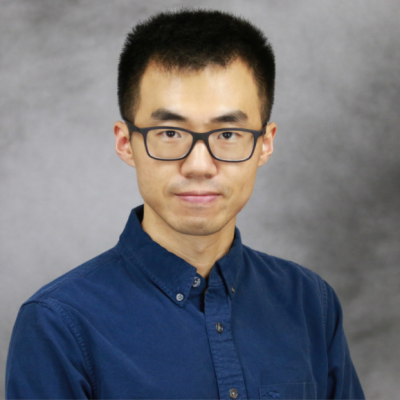
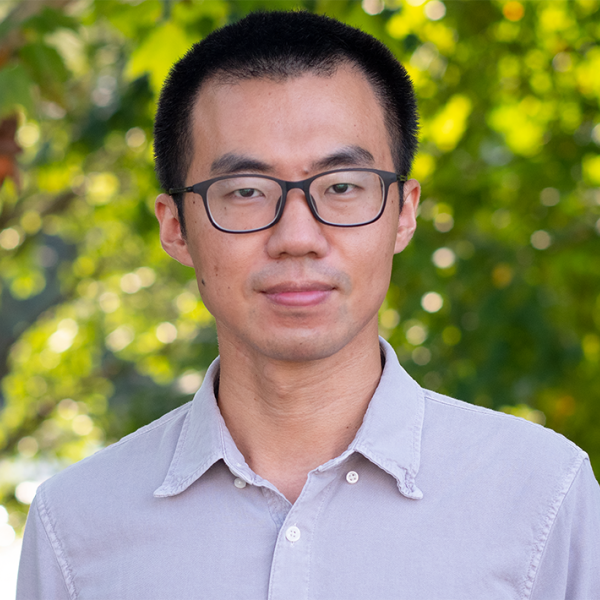
Sheng Li is an Assistant Professor at the School of Data Science, University of Virginia, where he joined in 2022. Previously, he served as an Assistant Professor in the Department of Computer Science at the University of Georgia (2018–2022) and was a Data Scientist at Adobe Research (2017–2018). He holds a Ph.D. in Computer Engineering from Northeastern University and earned his M.S. in Information Security and B.S. in Computer Science from Nanjing University of Posts and Telecommunications.
- Ph.D., Computer Engineering, Northeastern University
- M.S., Information Security, Nanjing University of Posts and Telecommunications
- B.S., Computer Science, Nanjing University of Posts and Telecommunications
His research centers on developing intelligent systems for open and dynamic environments, with a strong emphasis on trustworthy representation learning, including robustness, fairness, causality, and transferability. His work spans visual intelligence, natural language understanding, user modeling, and applications in bioinformatics and biomedical informatics. He actively contributes to advancing reliable and interpretable AI systems through interdisciplinary approaches.
Dr. Li has published extensively in top-tier journals and conferences in AI and data science. His editorial and leadership roles include serving as Associate Editor for seven journals such as IEEE Transactions on Neural Networks and Learning Systems, IEEE Transactions on Circuits and Systems for Video Technology, and IEEE Computational Intelligence Magazine, as well as Area Chair for premier conferences like NeurIPS and ICLR.
- Associate Editor, IEEE Transactions on Neural Networks and Learning Systems
- Associate Editor, IEEE Transactions on Circuits and Systems for Video Technology
- Associate Editor, IEEE Computational Intelligence Magazine
- Area Chair, NeurIPS
- Area Chair, ICLR
He advises students and leads the Reasoning and Knowledge Discovery (RISE) Laboratory, which focuses on foundational and applied aspects of AI reasoning, knowledge extraction, and intelligent system design. While specific grant details are not mentioned, his leadership roles and active research program suggest sustained funding and collaboration across domains.
The lab serves as a hub for innovation in AI trustworthiness and adaptive intelligence, aiming to build next-generation systems capable of operating effectively in real-world, evolving environments.