معرفی
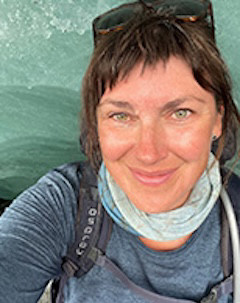
Shannon Fargey is an Associate Teaching Professor in the Department of Geography at the University of Victoria, Faculty of Social Sciences, where she has been a core teaching faculty member since 2014. She is based in Victoria, British Columbia, on the traditional territories of the lək̓ʷəŋən, Songhees, Esquimalt, and WSÁNEĆ peoples. Her work centers on teaching excellence and student discovery in physical geography, geomatics, and environmental sustainability.
- PhD, University of Manitoba
- MSc, University of Calgary
- BSc, University of Calgary
Her research interests include mountain meteorology, hydrology, climate change, spatial analysis, and field-based education. She is passionate about exploring mountain landscapes and leads field schools focused on alpine environmental change and meteorology. She is also committed to campus-based teaching across all levels of the geography program.
Her recent projects emphasize decolonizing and Indigenizing curriculum, particularly in the Clayoquot Sound Field Semester, and improving hydrological understanding in the Sooke Watershed through a dense network of rain gauges. These efforts reflect her interdisciplinary approach combining physical geography with community-engaged pedagogy.
Shannon has received multiple teaching accolades, including the 2023 Award for Excellence in Teaching from the Canadian Association of Geographers. She also serves as Undergraduate Advisor, Honours Advisor, and Chair of the Undergraduate Advisory Committee, actively mentoring students through directed studies and interdisciplinary projects.
- Award for Excellence in Teaching, Canadian Association of Geographers (2023)
- Early Career Teaching Excellence Award, Faculty of Social Sciences, UVic (2022–2023)
- J. Alistair McVey Award for Teaching Excellence, Western Division, CAG (2022–2023)
She supervises undergraduate honors and directed studies students and supports graduate committees, though she does not currently supervise graduate theses. Her lab and research activities are centered on field instrumentation and spatial data science, particularly in watershed and mountain environments. More details about her research are expected to be published soon.