معرفی
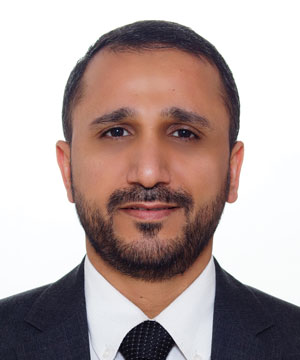
Dr. Shahid Khan serves as an Assistant Professor in the Department of Microelectronic Systems at the Faculty of Electronics, Telecommunications and Informatics, Gdańsk University of Technology. His academic appointment is firmly situated within the engineering faculty, where he contributes to research and teaching in microelectronics and telecommunications systems.
Research Interests:
Dr. Khan's primary research spans wireless communications for 5G and beyond (B5G), with a concentrated focus on Internet of Things (IoT) applications. His work encompasses the design of advanced antenna systems including MIMO configurations for millimeter-wave frequencies, beam steering techniques, and the integration of machine learning for mobility management in autonomous vehicle networks. He also investigates electromagnetic structures such as frequency selective surfaces and metamaterials to enhance wireless coverage and reduce path loss in advanced communication systems.
Publication Trends:
His 2025 publications demonstrate a cohesive research trajectory centered on innovative solutions for 5G IoT infrastructure. Key themes include compact antenna array design for millimeter-wave bands, port isolation techniques using metamaterials, and machine learning algorithms for seamless handovers in vehicular networks. These contributions appear in high-impact journals including IEEE Internet of Things Journal and Scientific Reports, reflecting his specialization in advancing wireless communication technologies for next-generation applications.
Scientific Awards:
- No specific awards, fellowships, or medals were mentioned in the provided information.
Advising and Grants:
The available text contains no details regarding graduate students supervised by Dr. Khan or research grants secured for his projects. His academic profile emphasizes publication output rather than mentoring or funding activities.
Laboratory Affiliations:
While specific laboratory facilities aren't explicitly detailed, his research on 3D-printed dielectric lenses and metamaterial integration suggests active involvement with antenna fabrication and testing facilities within the Department of Microelectronic Systems.