معرفی
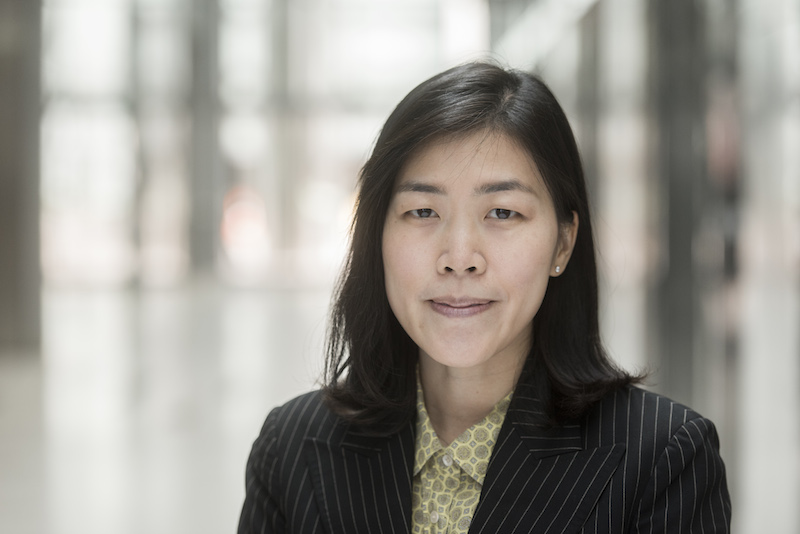
Seungyoon Lee is a Professor at Purdue University specializing in network analysis, resilience, and disaster recovery research. Her work examines the evolution of communication, knowledge, and collaboration networks in organizational contexts with significant applications in disaster management and community resilience.
Her educational background includes:
- Ph.D. from the University of Southern California
- M.A. from the University of Southern California
- B.A. from Yonsei University
Professor Lee's research centers on applying socio-cultural evolution theories to complex networks including multiplex and multimodal structures. She investigates creative interaction patterns in project teams, network dynamics in disaster recovery contexts, and the determinants of multiplex ties across diverse settings. Her methodological expertise bridges organizational communication theory with advanced social network analysis techniques.
Analysis of her publication trajectory reveals consistent focus on disaster resilience with increasing emphasis on hurricane evacuation decision-making, social support networks in recovery processes, and information environments during crises. Recent work integrates network analysis with psychological factors like risk perception and uncertainty to explain evacuation behaviors, while earlier research established foundations in organizational network evolution and multiplexity.
Her notable recognition includes:
- 2009 W. Charles Redding Dissertation Award from the Organizational Communication Division of the International Communication Association
Professor Lee teaches graduate and undergraduate courses in social network analysis, organizational communication, and research methods. Her active research program demonstrates strong connections between theoretical network frameworks and practical disaster management applications, with particular relevance to household recovery processes and community resilience building. Current projects indicate growing interest in misinformation dynamics during pandemics and conflict-affected communities.
While specific laboratory affiliations aren't detailed in the source material, her research methodology suggests collaboration with interdisciplinary disaster response teams and network analysis specialists, particularly evident in hurricane evacuation studies and post-disaster community assessments.