معرفی
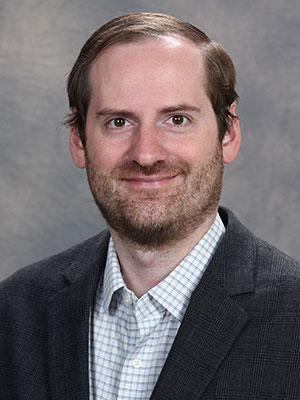
Sergiy Butenko is a Professor and Liollio Family Faculty Fellow in the Wm. Michael Barnes '64 Department of Industrial and Systems Engineering at Texas A&M University, serving as Editor-in-Chief of the Journal of Global Optimization.
His educational background includes:
- B.S. and M.S. in Mathematics from Kyiv National Taras Shevchenko University, Ukraine
- M.S. and Ph.D. in Industrial and Systems Engineering from the University of Florida
Dr. Butenko's research focuses on discrete and global optimization, network analysis, and graph theory, with emphasis on theoretical and computational approaches for solving discrete optimization problems on graphs. His work spans applications in biological/social network analysis, wireless sensor networks, energy systems, and transportation.
Analysis of his publications reveals consistent focus on clique relaxations, connectivity constraints, and integer programming for network problems, bridging operations research, computer science, and network science with practical applications in communication and social systems.
His scientific awards include:
- Charles H. Barclay, Jr. Faculty Fellow, Texas A&M University College of Engineering (2012)
- Young Investigator Program Award, Air Force Office of Scientific Research (2008)
- Favorite Professor of the Year, IIE Student Chapter, Texas A&M University (2006)
- Outstanding Teaching Assistant Award, ISE, University of Florida (2002, 2003)
- Graduate Student Award for Excellence in Research, ISE, University of Florida (2002)
- Outstanding International Student Award, College of Engineering, University of Florida (2001)
Dr. Butenko's research is supported by major federal and international agencies:
- Air Force Office of Scientific Research (including 2008 Young Investigator Program Award)
- National Science Foundation
- U.S. Department of Energy
- Office of Naval Research
- CRDF Global
- North Atlantic Treaty Organization
His collaborative work with researchers across multiple institutions demonstrates active engagement in interdisciplinary optimization and network science research teams, though specific laboratory facilities are not detailed in available sources.