معرفی
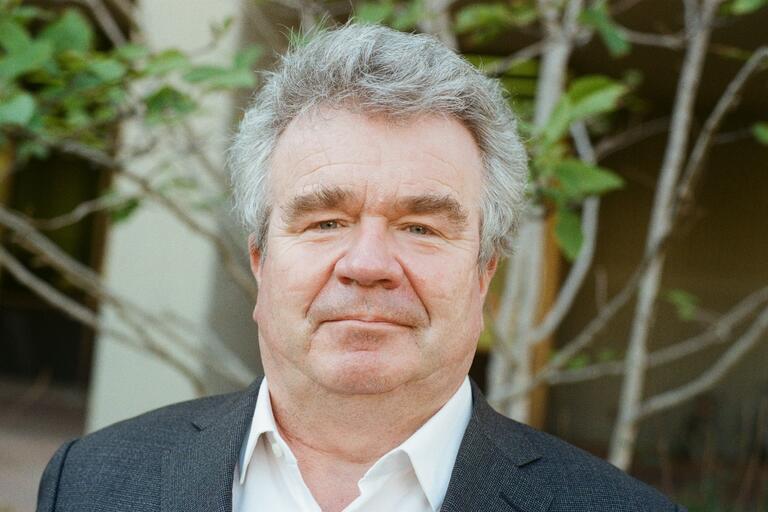
Semyon Dyatlov is a Professor in the Department of Mathematics at the Massachusetts Institute of Technology (MIT), School of Science. He is an active researcher in mathematical analysis, with a focus on semiclassical analysis, quantum chaos, scattering theory, and microlocal analysis. His work bridges deep theoretical mathematics with applications in mathematical physics.
His research interests include:
- Quantum Chaos and Eigenfunction Behavior
- Fractal Uncertainty Principle and Spectral Gaps
- Resonances in Scattering and Dynamical Systems
- Microlocal and Semiclassical Analysis
- Pollicott–Ruelle Resonances and Dynamical Zeta Functions
- Wave Propagation and Internal Waves
The recent publications reflect a strong trend in applying microlocal techniques to problems in quantum chaos and dynamical systems. His work frequently involves proving spectral gaps, analyzing eigenfunction concentration, and studying resonances in hyperbolic and chaotic settings. A unifying theme is the use of the fractal uncertainty principle to obtain sharp bounds in scattering and ergodic theory.
His scientific contributions are recognized through publications in top journals and invitations to speak at major conferences such as the International Congress of Mathematicians (ICM 2022) and the Joint Mathematics Meetings (JMM 2025). He has co-authored a graduate textbook and produced extensive lecture notes and expository articles, enhancing educational resources in his field.
He advises students and has taught courses at MIT and UC Berkeley, including topics like differential analysis, chaotic dynamics, and semiclassical analysis. He serves on the editorial boards of several leading journals, including Cambridge Journal of Mathematics, Communications in Mathematical Physics, and Probability and Mathematical Physics. He is also actively involved in organizing academic events, such as the 2024 MIT conference honoring Richard Melrose.
His research is supported by collaborations with prominent mathematicians such as Maciej Zworski, Jean Bourgain, Long Jin, and Colin Guillarmou. He continues to be an influential figure in the global mathematical community, with ongoing teaching and research activities, including a course scheduled for Spring 2025.