معرفی
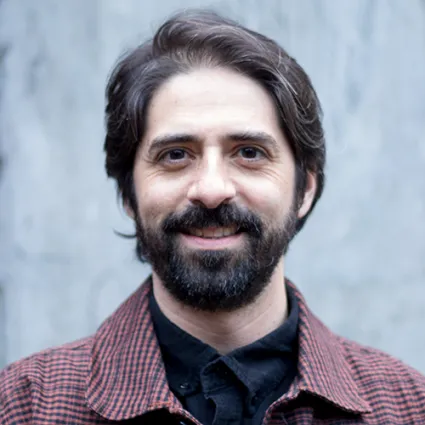
Sebastian Wiedemann is an Assistant Professor at the School of Arts, National University of Colombia, where he teaches and conducts research at the intersection of film, philosophy, and artistic practices. He is also affiliated with Universidade Estadual de Campinas in Brazil. As a practitioner of cinematic modes of experience, Wiedemann works as a filmmaker, artist-researcher, philosopher, and educator with a focus on decolonial approaches to cinema and thought. He serves as a curator at hambrecine.com, promoting experimental Latin American cinema.
Wiedemann's research centers on contemporary philosophy, particularly the philosophy of film, experimental cinema, and what he terms "cinematic modes of experience." His work explores the intersections between audiovisual practices and philosophical thought, with special attention to Latin American and Asian cinematic traditions. Key areas of investigation include cosmopolitics of the image, research-creation methodologies, and the relationship between cinema and decolonial thought. His theoretical framework draws heavily on Deleuze and Guattari's philosophy, Oswald de Andrade's concept of anthropophagy, and indigenous ontologies from extra-modern peoples like the Yanomami and Yoruba.
Through his publications and curatorial work, Wiedemann has established "Deep Blue" as a significant research-creation project that functions as a speculative scenario for exploring cinematic embryology, diagrammatic obliquation, and radical pedagogy. His work consistently challenges anthropocentric perspectives, advocating for more-than-human approaches to cinema and thought that emphasize co-creation, co-existence, and the affirmation of difference. The trajectory of his recent scholarship demonstrates a growing emphasis on ecological thinking, speculative fabulation, and the development of what he calls "kinosophy" - a wild and tropical media philosophy.
As an educator, Wiedemann develops pedagogical approaches that treat creative processes as laboratories of speculative pragmatism. His teaching philosophy emphasizes collective learning communities, perceptual exploration, and alliances with non-human entities like plants. He has coordinated the International Colloquium on Cinema and Philosophy in Mexico City and Oaxaca (2023-2024), creating spaces for live thinking focused on Latin American experimental cinema and its intersections with post-natural fields.
Wiedemann's academic filmmaking represents a gesture of social justice, particularly evident in projects like "Present Bodies. Emancipated Voices," which resulted from a co-creation process with vulnerable teenagers in Toro, Colombia. This work, informed by communitarian feminist epistemology, seeks to collectivize emancipatory thought through images, sounds, and words in response to gender-based violence in Latin America.