معرفی
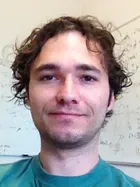
Sebastian Probst serves as a Research Fellow in the Biomathematics Research Group at Bielefeld University's Faculty of Technology, working under Prof. Ellen Baake. He holds dual roles as the group's computing officer and coordination support for the Priority Program 1590 ("Probabilistic Structures in Evolution"), managing its critical webservices infrastructure.
His academic foundation includes a 2012 Diploma in Mathematics from Gottfried Wilhelm Leibniz Universität Hannover, completed in Marc Steinbach's Algorithmic Optimization group, followed by doctoral research culminating in October 2018 within Baake's Biomathematics workgroup at Bielefeld.
Probst's research centers on population genetics with emphasis on recombination dynamics modeling. He integrates numerical mathematics and probability theory to estimate evolutionary model parameters, while developing frameworks to explain Richard Lenski's decades-long bacterial evolution experiment through advanced simulation methodologies. His work bridges theoretical biology with computational mathematics to decode complex evolutionary processes.
Analysis of his publications reveals a cohesive research trajectory in theoretical population genetics, where stochastic modeling converges with computational biology. Both major works demonstrate rigorous mathematical treatment of evolutionary phenomena—from fundamental recombination mechanics in the Moran model to large-scale simulation of experimental evolution—highlighting consistent interdisciplinary innovation at the mathematics-biology interface.
No scientific awards or honors were documented in the source material.
While maintaining extensive teaching responsibilities since 2012 across probability theory, statistics, and mathematical biology courses, no formal graduate student advising or research grant activities were specified in the available records.
Within the Biomathematics ecosystem, Probst anchors computational operations for the research group and provides essential coordination for SPP 1590. His technical leadership sustains collaborative frameworks for studying probabilistic evolutionary structures, directly enabling the program's research infrastructure through web service development and maintenance.