معرفی
Scott Hooper is a Professor in the Department of Biological Sciences at Ohio University's College of Arts and Sciences, where he conducts interdisciplinary research at the intersection of neuroscience, biomechanics, and computational biology. He is also affiliated with the Quantitative Biology Institute, reflecting his quantitative and modeling approaches to biological systems. His office is located in Wilson Hall West 013 on the Athens Campus.
Education:
- Ph.D., Brandeis University
Dr. Hooper's research focuses on understanding how animals generate rhythmic motor behaviors such as walking, swimming, and flying. His lab investigates these processes across multiple levels—from individual neurons and neural networks to muscle dynamics and whole-limb movement—using both experimental and computational methods. A primary model system in his work is the stick insect, which allows for detailed neurophysiological and biomechanical analysis of locomotion.
His recent publications demonstrate a strong trend in integrating biological data with theoretical models, particularly in muscle biophysics, neuromodulation, and passive mechanical contributions to movement. This work bridges neuroscience and engineering principles, contributing to fields such as bio-inspired robotics and neural control systems.
Scientific Awards:
- No awards listed in the provided text.
Dr. Hooper teaches courses including BIOS 1710: Ecology, Evolution, and Animal Body Systems and BIOS 2060: Drugs and the Brain. While specific grant funding and student advisees are not mentioned, his active publication record from 2018 to 2022 indicates ongoing research supported by collaborations with international experts such as A. Büschges. His lab, located in Wilson Hall West 014, maintains a focus on fundamental questions in motor system function.
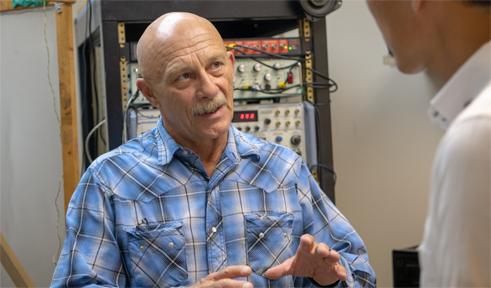
Laboratory and Team: The Hooper Lab studies motor pattern generation using insect models and combines electrophysiological experiments with computational modeling. The team engages in collaborative research, particularly with neurobiologists and biomechanists in Germany, indicating an active and internationally connected research group.