معرفی
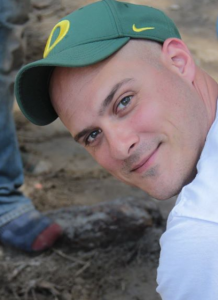
Scott Fitzpatrick is a Professor in the Department of Anthropology at the University of Oregon, College of Arts and Sciences, where he also serves as the Curator for Indo-Pacific Archaeology at the Museum of Natural and Cultural History. His research spans Pacific and Caribbean island archaeology, historical ecology, seafaring, exchange systems, and human-environment interactions. He is actively involved in field projects across Palau, the Caribbean, Florida Keys, and the Oregon Coast.
His research interests focus on how ancient island societies adapted to environmental constraints, colonized remote islands, and developed complex exchange networks. He investigates human impacts on island ecosystems, sustainability in prehistoric contexts, and the use of chronometric techniques to refine settlement timelines. His work integrates archaeological science, zooarchaeology, bioarchaeology, and environmental reconstruction to understand long-term human resilience.
The recent publications reflect a strong trend in interdisciplinary research, combining archaeology with sustainability science, biomolecular analysis, and climate change impacts. Themes include island colonization, artificial landforms, seasteading, ancient exchange systems, and the role of islands as models for understanding global environmental challenges. His work frequently appears in top-tier journals such as Science, Nature Scientific Reports, and PNAS.
Dr. Fitzpatrick has received research support from the National Science Foundation, National Geographic, U.S. Department of the Interior, and the Sasakawa Peace Foundation. He is the founding Co-Editor of The Journal of Island and Coastal Archaeology and serves on the editorial boards of several major journals.
He has advised multiple graduate students, including Matthew F. Napolitano, Jessica H. Stone, and Robert DiNapoli, who have co-authored publications with him. His lab, the Coastal Lab, supports interdisciplinary research in coastal and island archaeology, focusing on material culture, faunal analysis, and environmental data. The team collaborates widely across institutions and integrates biological, geological, and anthropological data to reconstruct past human lifeways.
حوزههای پژوهشی