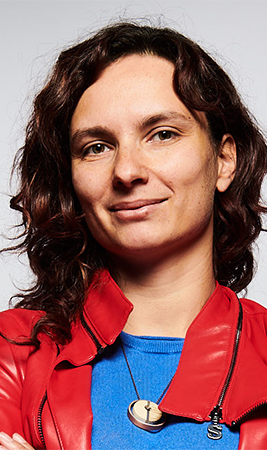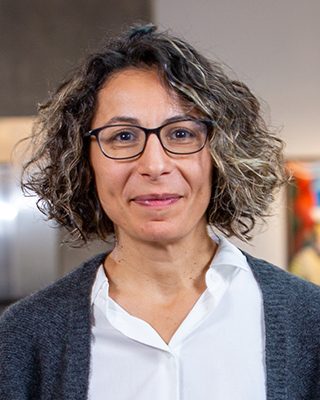
معرفی
Sara Mostafavi is an Associate Professor at the Paul Allen School of Computer Science & Engineering at the University of Washington (UW), with a focus on Artificial Intelligence and Computational Biology. She is currently on leave (2024-2025) leading the Computational Biology and Translation Organization at Genentech. Mostafavi previously held faculty roles at the University of British Columbia (UBC) and the Vector Institute, where she received prestigious Canada Research Chair (CRC II) and Canada CIFAR Chair in AI (CIFAR-AI) awards.
- PhD in Computer Science, University of Toronto (2011)
- Postdoctoral Researcher, Stanford University
Her research develops machine learning and statistical methods to study gene regulation, disease susceptibility, and molecular networks, with applications in immunology, genetics, and neuroscience. She has pioneered sequence-to-function models for understanding gene regulatory grammar and predicting disease mechanisms.
Her publications highlight expertise in genomic data integration, interpretable AI, and cross-modality learning. Recent work includes analyzing mosaic chromosome loss in aging microglia, immune cell differentiation, and Alzheimer's disease networks.
Scientific Awards
- Canada Research Chair (CRC II) in Computational Biology (2015–2020)
- Canada CIFAR Chair in Artificial Intelligence (CIFAR-AI)
- Co-founder of the Machine Learning for Computational Biology (MLCB) Conference
Mostafavi has mentored numerous PhD and Master’s students, including Xinming Tu, Anna Spiro, Gherman Novakovsky (PhD 2023), and Elijah Willie (MSc 2020). Her lab collaborates with institutions like the Immunological Genome (ImmGen) Consortium and Canadian Institute for Advanced Research (CIFAR).
She leads the Mostafavi Lab, which specializes in combining association evidence across genomics datasets and modeling biological pathways to disentangle spurious correlations. Her team develops tools like CEWAS, AI-TAC, and Brain xQTL web server.