معرفی
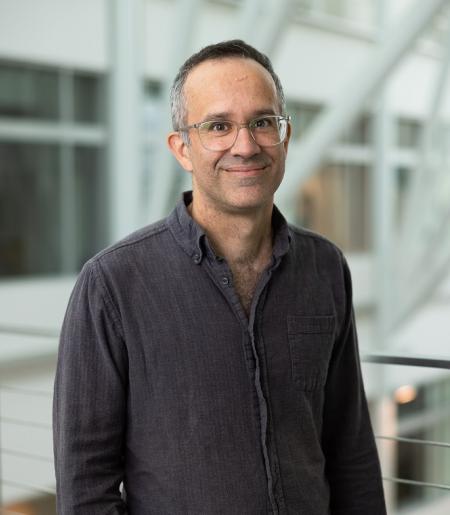
Saad Bhamla is an Assistant Professor of Biomolecular Engineering at the Georgia Institute of Technology's College of Engineering, School of Chemical and Biomolecular Engineering. His work spans biology, physics, and engineering, focusing on biomechanics across species to engineer knowledge and tools that inspire curiosity. A self-proclaimed "tinkerer," his lab produces discoveries and inventions at the intersection of multiple disciplines.
Dr. Bhamla's research focuses on three main areas:
- Ultra-fast Organismic Physics: Studying extreme motility across species from jellyfish to single-cell organisms that achieve accelerations exceeding a million g-forces
- Biological Soft Matter: Exploring the physics of soft, wet materials in biological systems from tears to insect foams
- Frugal Science and Global Health: Developing ultra-low-cost scientific tools and healthcare devices accessible worldwide
His publications reveal a consistent pattern of investigating biological phenomena through physics and engineering principles, with strong emphasis on practical applications for global health challenges. The research spans from fundamental questions about biological motion to practical solutions for healthcare accessibility.
Dr. Bhamla has received numerous scientific awards including:
- NIH R35 Outstanding Investigator Award
- NSF CAREER Award
- CTL/BP Junior Faculty Teaching Excellence Award
- INDEX: Design to Improve Life Award
- Recognized as 1 of 10 Innovators disrupting healthcare by Newsweek (June 30, 2023)
As an educator and researcher, Dr. Bhamla leads the Bhamla Lab, a group dedicated to cultivating curiosity in science. His work has attracted significant funding from NIH and NSF, supporting research in organismic physics, soft matter, and frugal science applications. He is also a co-founder of Piezo Therapeutics, a National Geographic Explorer, and a TED speaker.
The Bhamla Lab, known for studying everything from worm blobs to cyborg cells, is set to move to the Biofrontiers Institute at CU Boulder in Fall 2026, continuing its mission of science powered by curiosity. Current lab activities include hiring four postdocs in organismal biophysics, soft robotics, frugal Raman diagnostics, and innovative research ideas.