معرفی
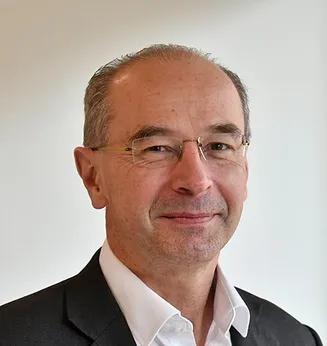
Rudy Luck serves as an Associate Professor in the Chemistry Department at Michigan Technological University (MTU), where he leads research in inorganic and organometallic chemistry. His academic journey includes a PhD and MSc from the University of Toronto, followed by postdoctoral work at Texas A&M University under Frank A. Cotton. With over three decades of experience, Luck maintains an active research program and teaches a wide range of courses from introductory chemistry to advanced graduate seminars in organometallic chemistry and X-ray diffraction.
Luck's research spans two primary domains: traditional inorganic synthesis and modern fluorescent probe development. Early work focused on low-valent molybdenum complexes capable of activating dinitrogen, heteronuclear quadruply-bonded metal-metal systems, and molecular dihydrogen compounds. His contributions to interpreting T1 NMR measurements for dihydrogen ligands remain influential. More recently, his lab has pioneered near-infrared fluorescent probes for mitochondrial pH monitoring, NAD(P)H dynamics, and oxidative stress detection in live cells and model organisms. This dual expertise enables unique applications in catalysis (epoxidation of olefins) and metallo-framework cluster materials.
His publication record shows a significant shift toward biochemical applications starting around 2018, with over 30 high-impact papers in the last five years focusing on ratiometric pH sensors, NAD(P)H probes, and mitochondrial physiology. The research leverages advanced techniques including single-crystal X-ray diffraction (using an Enraf-Nonius Turbo CAD4 diffractometer), Gaussian computational modeling, and live-cell imaging. Recent work demonstrates applications in Drosophila larvae, zebrafish, and cancer cell models.
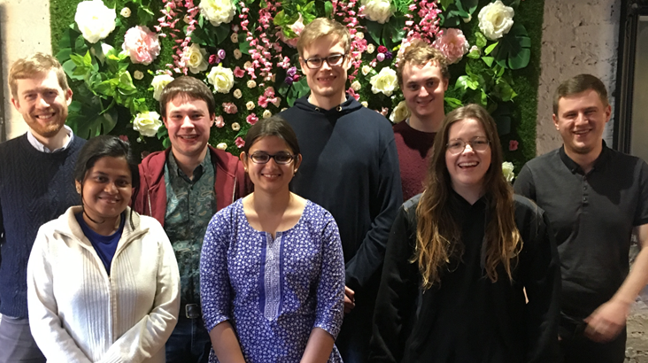
Luck mentors a robust research group including multiple PhD candidates and maintains strong industry collaborations. His lab utilizes specialized equipment including glove boxes for air-sensitive synthesis and high-performance computing resources for theoretical calculations. The transition from fundamental inorganic chemistry to biomedical applications represents a significant evolution in his research program while maintaining core expertise in molecular design and characterization.