معرفی
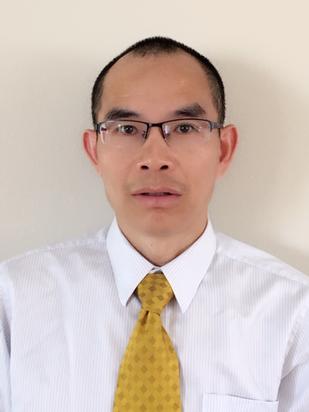
Rouzbeh Ghanbar Moghanloo serves as the ONEOK Chair in Natural Gas Engineering and Management and Associate Professor at the University of Oklahoma's Mewbourne School of Petroleum and Geological Engineering, where he also directs the Natural Gas Engineering and Management Program. A prolific researcher with 148 peer-reviewed publications, his work bridges petroleum engineering and environmental sustainability through advanced computational methods.
Education:
- B.Sc. in Chemical Engineering, Amirkabir University of Technology (2001)
- M.S. in Reservoir Engineering, Amirkabir University of Technology (2003)
- Ph.D. in Petroleum Engineering, The University of Texas at Austin (2012)
Dr. Moghanloo's research integrates machine learning with petroleum engineering to tackle critical energy challenges, focusing on enhanced oil recovery, CO2 sequestration, flow assurance, and unconventional resources. His pioneering work on asphaltene deposition modeling and multiphase flow systems has established new methodologies for reservoir management. Recent investigations emphasize sustainable transitions, including hydrogen production from flare gas and AI-driven emission reduction techniques that align energy production with climate goals.
Analysis of his 15 most recent publications reveals a dominant trend toward AI-enhanced subsurface modeling, with 60% incorporating machine learning for predictive reservoir analysis. Key thematic clusters include carbon management (28% of publications), flow assurance optimization (22%), and sustainable resource conversion (20%), demonstrating strategic alignment with industry decarbonization imperatives while maintaining core petroleum engineering expertise.
Scientific Recognition:
- 2018 SPE Mid-Continent Regional Reservoir Description and Dynamics Award
- 2016 ACS Petroleum Research Fund (PRF) Award
Dr. Moghanloo has secured significant U.S. Department of Energy funding as Principal Investigator for carbon storage projects in Oklahoma's Arbuckle Group, while holding three patents for wellbore treatment technologies. His industry impact extends through technical advisory roles for major energy firms and editorial leadership in prominent journals. The Natural Gas Engineering and Management Program under his direction fosters industry-academia collaboration, with research teams developing real-time monitoring systems and economic models for CO2 transportation networks that are currently being field-tested in Oklahoma's STACK/SCOOP plays.