معرفی
Dr. Roberto Joseph is a faculty member at Hofstra University's School of Education and the founding director of the M.A. program in Technology for Learning, launched in fall 2013. His work bridges educational theory and digital innovation, focusing on how game design can transform mathematics education for elementary and middle school students, especially those from minority and urban communities.
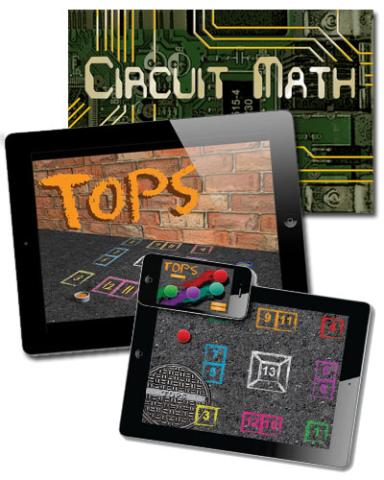
His research centers on culturally responsive educational gaming and student-driven app development. He believes that when students create their own games, they gain ownership over their learning, making math a tool rather than a task. This philosophy underpins projects like TOPS and Circuit Math, two educational apps developed with Hofstra students to teach foundational math skills through street games and puzzles.
Dr. Joseph leads the iDesign project, funded by a $1.2 million National Science Foundation grant, in partnership with ten middle schools across New York City and Long Island. The initiative engages 450 students in grades 6–9 in after-school game design clubs, while also training teachers in integrating mobile and digital technologies into classrooms. He also founded the Math App Academy, supported by a $30,000 Innovation Generation grant from the Motorola Solutions Foundation, where 50 Long Island middle schoolers learn app development on weekends at Hofstra.
His work reflects a shift from passive game-playing to active game-making in education, emphasizing relevance, motivation, and real-world application. By tapping into students’ familiarity with digital environments, he fosters deep engagement with mathematical concepts as tools for creative expression.
- National Science Foundation Grant ($1.2 million) – iDesign Project
- Motorola Solutions Foundation Innovation Generation Grant ($30,000) – Math App Academy
Dr. Joseph mentors graduate and undergraduate students in interdisciplinary collaborations involving education, technology, and design. His lab-like initiatives include student-co-developed apps and sustained partnerships with local schools, forming a community of practice around game-based learning. These programs serve as living laboratories for research on engagement, equity, and innovation in STEM education.