معرفی
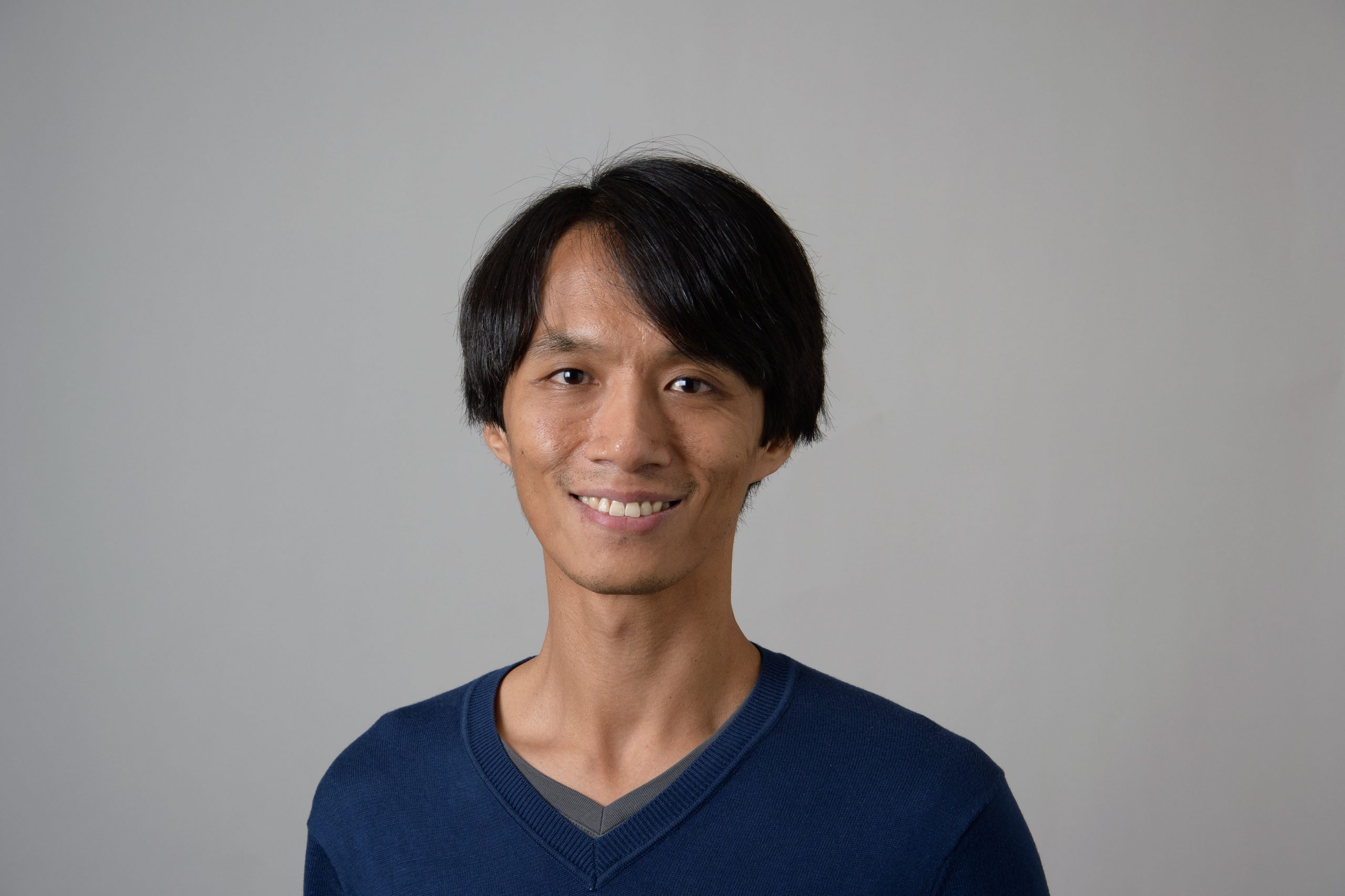
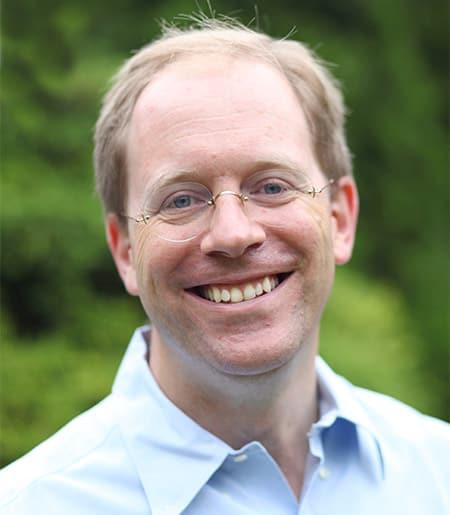
Robert Young is a Professor of Mathematics at the Courant Institute of Mathematical Sciences, New York University. His research bridges geometric group theory, metric geometry, and quantitative geometry, with a focus on asymptotic invariants, filling functions, and embeddings of non-Euclidean spaces such as the Heisenberg group. He has taught a wide range of graduate courses including Differential Geometry, Topology, and specialized topics in geometric group theory and quantitative geometry.
His educational background includes:
- Ph.D. in Mathematics, University of Chicago, 2007
- M.S. in Mathematics, University of Chicago, 2004
- B.A. in Math/Physics, Simon's Rock College of Bard, 2002
Robert Young's research interests lie at the intersection of geometry, topology, and analysis. He investigates how geometric invariants behave asymptotically, particularly in non-positively curved and nilpotent settings. His work on filling functions, systolic geometry, and quantitative rectifiability has implications for understanding the large-scale structure of groups and spaces. He has contributed to the theory of asymptotic cones and embedding problems, especially in relation to the Sparsest Cut problem in computer science. His research often involves constructing Hölder maps and analyzing the geometry of Carnot groups.
The trends in his scholarly output reflect a sustained focus on quantitative aspects of geometric topology and group theory. His articles and lecture notes explore deep connections between analysis, geometry, and group theory, particularly through the lens of large-scale invariants such as Dehn functions, filling inequalities, and uniform rectifiability. He frequently works with non-Riemannian geometries like the Heisenberg group and applies techniques from geometric measure theory to solve extension and embedding problems.
He has co-organized major academic events such as the 2015 Geometry Festival at NYU and the conference "Singularities: Geometric, Topological, and Analytic Aspects" at the Simons Foundation, indicating active engagement in the mathematical community.
Robert Young has advised numerous Ph.D. students and mentored young researchers through graduate courses and directed reading programs. While specific names are not listed, his long-standing role as a professor and frequent instructor of advanced graduate topics suggests a strong commitment to academic mentorship. He has not been awarded any named scientific prizes in the provided text, but his publication record and conference organization reflect significant scholarly impact.
He leads or is a central member of research activities in geometric group theory and quantitative geometry at the Courant Institute, collaborating with students, postdocs, and visiting scholars on problems involving filling invariants, asymptotic cones, and geometric embeddings.