معرفی
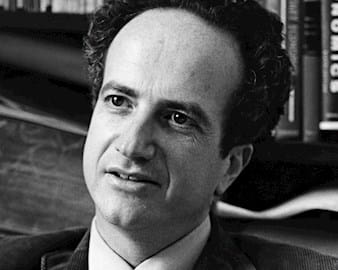
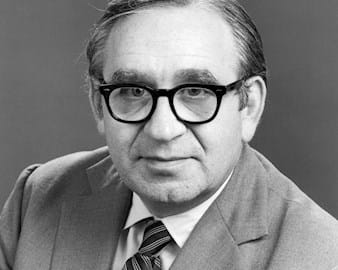
Robert W. Fogel was a Nobel Prize-winning economic historian at the University of Chicago Booth School of Business. He revolutionized economic history through quantitative methods, focusing on slavery's economic viability, railroad impacts, and biomedical-socioeconomic interplay. Fogel's research challenged conventional narratives on slavery's profitability and railroad's GDP influence. He led the Center for Population Economics until his death in 2013.
Education:
- B.A. in History (with Economics minor) from Cornell University, 1948
- M.A. in Economics from Columbia University, 1960
- PhD in Economics from Johns Hopkins University, 1963
Research Focus: Fogel pioneered cliometrics, applying economic theory to historical analysis. Key areas included slavery economics, health cost forecasting, and the interplay between demography and economics. His work emphasized counterfactual analysis and quantitative rigor, reshaping understandings of institutional change and economic progress.
Publications: His seminal works include Time on the Cross (1974), Railroads and American Economic Growth (1964), and Without Consent or Contract (1989). These works sparked debates on slavery's efficiency and railroad's overestimated economic role.
Awards:
- 1993 Nobel Prize in Economic Sciences
- 2006 Alliance for Aging Research Recognition
Leadership: Fogel taught at Chicago Booth (1964–1975, 1981–2013) and led the Center for Population Economics. His legacy includes interdisciplinary approaches linking economics with health sciences and demography.