معرفی
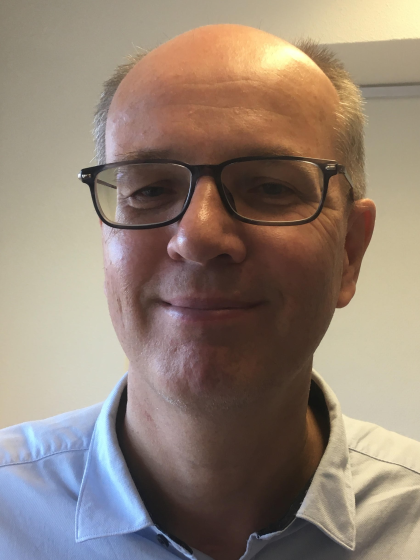
Dr. Richard Paping is an Associate Professor with ius promovendi at the Faculty of Arts, University of Groningen, specializing in Economic and Social History. He holds positions in the History department and the Section of Economic and Social History. His roles include programme coordinator for History Bachelor/Master programs and member of academic boards such as the Admissions Board for History and the Posthumus Institute Research School.
Education: Richard earned his BA and MA in Economics and History from the University of Groningen (1980–1988). He obtained his PhD in 1995 under Professors Pim Kooij and Rainer Fremdling, focusing on labor strategies and family dynamics in rural economies.
Research interests span regional history, agrarian systems, demographic patterns, and social mobility in the Netherlands (16th–20th centuries). Notable projects include studies on Jewish property restitution post-WWII in Groningen municipalities, long-term family demography (e.g., Oosterhesselen village), and farm accounts analysis to assess agricultural productivity. He leads projects on municipal policies towards Jewish real estate (1940–1955) and collaborates internationally via networks like CORN and WoG Historical Demography.
Teaching includes courses on Economic History, quantitative analysis, and methodology for Master students. He supervises theses and internships in Economic and Social History. His work often bridges micro-level data (e.g., farm accounts, parish records) with macro-economic trends, emphasizing theoretical frameworks from social sciences.
Administrative roles include chairing faculty committees and coordinating accreditation self-studies. He is a member of professional societies such as the Vereniging voor Landbouwgeschiedenis (VLUFA). Recent publications focus on medieval demography, Dutch regional history, and Holocaust-era property issues.