/images/2024/08/09/how-much-will-it-cost-to-watch-nfl.jpeg)
معرفی
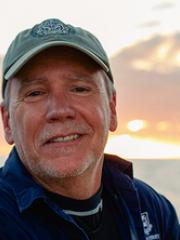
Richard Cook is an Associate Professor in the Department of Biomolecular Sciences within Kingston University's Faculty of Health, Science, Social Care and Education. Joining the university in 1996 as a lecturer, he has progressed through various leadership roles including course leader, field leader, deputy head of school, acting head of school, and head of department. His academic home is the School of Life Sciences, Pharmacy and Chemistry at Penrhyn Road campus.
His educational background includes a BSc Hons in Zoology (1st class), an MSc in Pollution & Environmental Control, and a PhD focusing on ecological invertebrate pest control and behaviour. Professionally, he holds recognition as a Senior Fellow of the Higher Education Academy (SFHEA) and a Fellow of the Royal Society of Biology (FRSB).
Cook's research program centers on invertebrate behaviour with particular emphasis on molluscs. His primary interests include low temperature biology of invertebrates, behavioural ecology of agricultural pests (especially molluscs), and molluscs as hosts of parasites. This research trajectory shows a clear evolution from field-based agricultural pest management toward more molecular investigations of mollusc immunity and physiology, with recent work expanding into cancer genetics related to mollusc models.
His publication record demonstrates significant contributions across parasitology, immunology, and agricultural science, with consistent focus on mollusc biology. The research spans from practical agricultural applications to cellular signaling mechanisms, reflecting both applied and basic science approaches to understanding invertebrate biology.
- Senior Fellow, Higher Education Academy
- Fellow, Royal Society of Biology
Cook teaches across multiple undergraduate programs including Biochemistry BSc (Hons), Biological Sciences BSc (Hons), and Biomedical Science BSc (Hons). His teaching responsibilities encompass environmental and organism biology, evolution, research methods, and biological statistics. He serves as module leader for LS6014 Projects (Bioscience) and LS5004 Research Methods & Concepts in Evolutionary Biology, demonstrating his commitment to research-led education.