معرفی
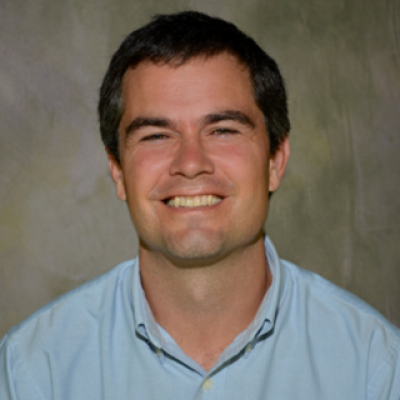
Dr. Richard Chandler is a Professor in the Department of Wildlife Ecology and Management at the University of Georgia's Warnell School of Forestry and Natural Resources. His research focuses on population dynamics, conservation biology, and spatial ecology, with particular emphasis on trailing-edge populations, metapopulation viability, and agricultural conservation. He holds a Ph.D. in Wildlife Conservation (University of Massachusetts Amherst, 2010), M.S. (2006), and B.S. (2002) in related fields.
Education: Ph.D. Wildlife Conservation (UMass Amherst, 2010); M.S. Wildlife Conservation (UMass Amherst, 2006); B.S. Wildlife Biology (University of Vermont, 2002). Research interests include modeling population viability, spatial capture-recapture methods, and the ecological impacts of climate change. His lab develops statistical frameworks to evaluate conservation strategies in agricultural landscapes and endangered species management.
Key research themes include: (Meta)population viability assessments for species like the Chiricahua leopard frog and Louisiana black bear; trailing-edge population dynamics in the southern Appalachian Mountains; spatial predator-prey dynamics in South Florida deer and Florida panther systems; and conservation strategies in agroecosystems. Recent work emphasizes integrating field data with hierarchical models to forecast population responses to environmental changes.
Publications span ecological modeling, conservation genetics, and applied wildlife management. His work often combines statistical innovation with practical conservation outcomes, such as optimizing monitoring protocols for ruffed grouse in Georgia and evaluating habitat restoration for migratory birds. Collaborators include federal agencies (USGS, FWS) and international institutions like the Smithsonian Tropical Research Institute.