معرفی
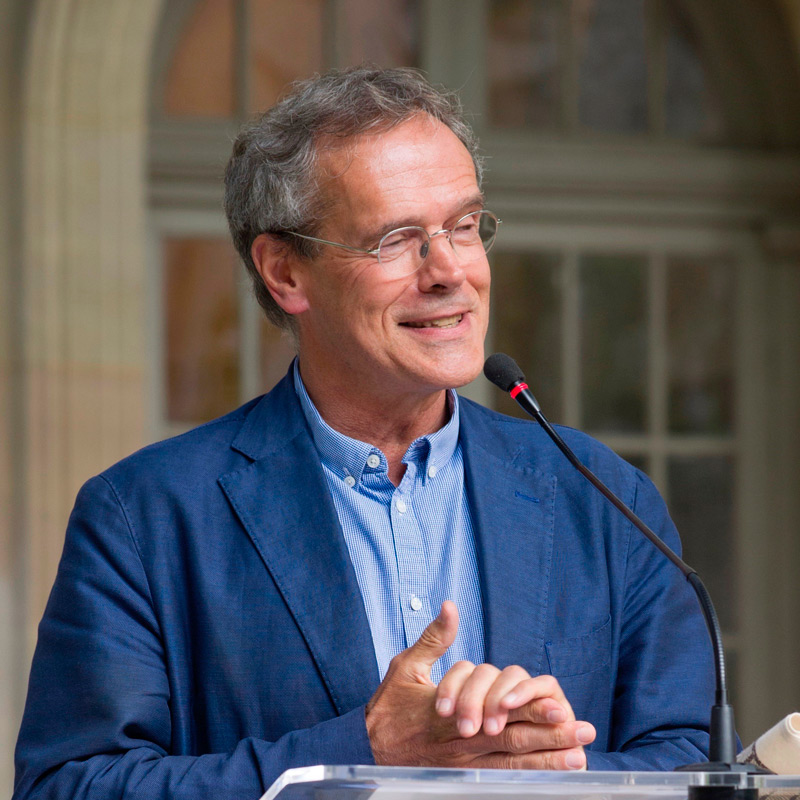
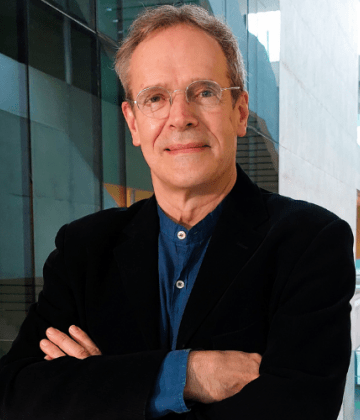
Riccardo Zecchina is a Full Professor in the Department of Computing Sciences at Bocconi University, Milan, holding this position since 2017 after serving as Full Professor of Theoretical Physics at the Polytechnic University of Turin (2007-2017) and as research scientist and head of the Statistical Physics Group at the International Centre for Theoretical Physics (ICTP) in Trieste (1997-2007). He maintains long-term visiting affiliations with Microsoft Research (Redmond and Cambridge MA) and the Laboratory of Theoretical Physics and Statistical Models (LPTMS) at the University of Paris-Sud.
His educational background includes a PhD in Theoretical Physics from the University of Turin under the supervision of Tullio Regge.
Professor Zecchina's research spans the intersection of statistical physics, computer science, and machine learning, with core expertise in learning algorithms, combinatorial optimization, probabilistic message-passing, computational neuroscience, and interdisciplinary applications of statistical physics. His work emphasizes both theoretical foundations and practical implementations in modern AI and biologically constrained models, addressing fundamental questions in neural network training and information processing.
His publication trajectory reveals a clear evolution from foundational work on phase transitions in satisfiability problems (1990s-2000s) to contemporary focus on deep learning optimization, loss landscape analysis, and computational biology applications (2010s-present), demonstrating consistent innovation at disciplinary boundaries.
His major scientific recognitions include:
- ERC Advanced Grant (2011-2015)
- Lars Onsager Prize in Theoretical Statistical Physics (2016, awarded jointly with M. Mezard and G. Parisi by the American Physical Society)
Professor Zecchina leads significant research initiatives including his ERC-funded work and co-founded Bocconi University's Department of Computing Sciences as an interdisciplinary hub for information and computation research. While specific student mentorship details are not publicly enumerated, his extensive collaborative publication record indicates active supervision of researchers across multiple institutions. The department operates under principles of openness and collegiality, fostering cross-disciplinary teams tackling fundamental modeling problems in computation.
حوزههای پژوهشی