معرفی
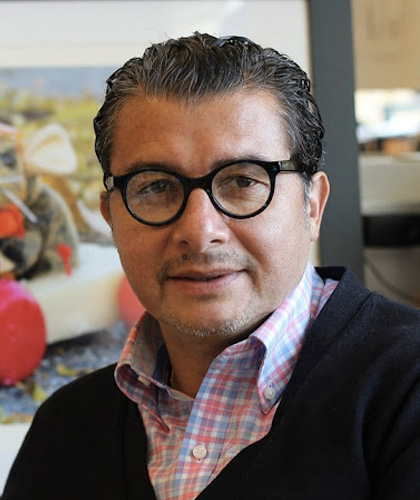
Ricardo C. Araneda is a Professor in the Department of Biology at the University of Maryland, College Park, with affiliations to the College of Computer, Mathematical and Natural Sciences, Brain and Behavior Institute, and Robert E. Fischell Institute for Biomedical Devices. His research laboratory is located in the Bioscience Research Building.
Dr. Araneda received his PhD in Neuroscience from the Albert Einstein College of Medicine in New York (1997) and completed his postdoctoral training at Columbia University, where he was also an Associate Research Scientist (1997-2006).
Dr. Araneda's research focuses on understanding how neuromodulators such as noradrenaline and acetylcholine regulate neuronal activity in the brain. Using the olfactory system as a model, his lab employs electrophysiology, imaging, molecular biology techniques, and behavior studies to investigate how neuromodulators influence sensory processing and behavior. His work addresses how neuromodulators affect odor-guided behaviors and the integration of adult-born neurons into pre-existing circuits. This research has implications for understanding pathological changes in olfactory circuits that occur in aging and neurodegenerative disorders.
His laboratory has made significant contributions to understanding neuromodulation in the olfactory bulb, including how noradrenergic and cholinergic systems enhance inhibitory tone, the rules of learning in neuronal networks, and the mechanisms of adult neurogenesis of inhibitory neurons. His recent publications reveal important insights into α2-adrenergic modulation of granule cells, cholinergic modulation of inhibitory domains, and long-range GABAergic inhibition in olfactory processing.
Dr. Araneda has received numerous scientific awards and recognition including the NSF Graduate Research Fellowship, Chateaubriand Fellowship, and Cosmos Club Foundation Fellowship. His research is supported by major funding sources including NSF EFRI ELiS, NSF URoL:EN, and UMD MPower Seed Grants.
With a commitment to excellence in mentoring, Dr. Araneda has trained over 80 undergraduate students, 6 graduate students, and 5 high school students. His laboratory is part of the Brain and Behavior Institute and collaborates with the Fischell Institute for Biomedical Devices. The lab maintains active collaborations on developing novel technologies to study neuronal function and cell-based sensors, as well as research on hypothalamic control of food consumption.