معرفی
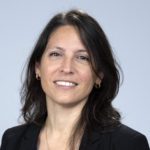
Dr. Raquel Hurtado-Ortiz serves as the head of the National Collection of Microorganism Cultures (CNCM), an International Depositary Authority operating under the Budapest Treaty and co-supervised by the French Institute of Industrial Property at Institut Pasteur in Paris. She leads the Pasteur Institute Biological Resource Center (CRBIP) and represents the Microbial Resource Research Infrastructure (MIRRI) in the ISIDORe project. As an active member of the Budapest Treaty Forum managed by the World Intellectual Property Organization, she contributes to international frameworks governing microbial resources.
Her research focuses on microbial resource management, biobanking infrastructure, and the implementation of international agreements including the Nagoya Protocol and Budapest Treaty. She specializes in digital sequence information governance, microbial taxonomy, and the development of standards for biological resource centers. Her work bridges scientific research with policy implementation, particularly in the areas of access and benefit-sharing of genetic resources.
Analysis of her publication record reveals consistent contributions to microbial taxonomy, biobanking standards, and policy frameworks. Her recent work emphasizes the integration of digital sequence information into international governance structures, reflecting evolving challenges in microbial resource management. She has contributed significantly to European research infrastructure development through multiple projects including MIRRI-ERIC, IS_MIRRI21, and RI-VIS.
Dr. Hurtado-Ortiz actively participates in European research infrastructure governance as a member of the Board of Directors for ISIDORe and the European Microbial Biobanking Organization (ECCO). Her leadership extends to coordinating international efforts in microbial resource management and biobanking standards across multiple European projects.
She has presented at numerous international conferences including the ECCO Annual Meeting and MIRRI Stakeholder Meetings, demonstrating active engagement with the global microbial resource community. Her work supports researchers worldwide through the provision of authenticated microbial strains and associated data, facilitating scientific discovery and innovation.