معرفی
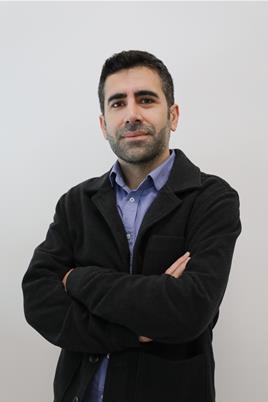
Ramazan ÇINAR serves as an Assistant Professor in the Department of Interior Architecture and Environmental Design at Istanbul Beykent University's Faculty of Fine Arts. His academic profile centers on the sociological analysis of urban space, with specialized expertise in power dynamics within spatial organization and cultural heritage conservation in Turkish metropolitan contexts.
Education
- Doctorate from Mimar Sinan Fine Arts University (2017-2022), Institute of Science, Thesis: "Production of ideological space representations in Diyarbakır city center"
- Master's from Istanbul University (2015-2017), Institute of Social Sciences
- Licence from Dokuz Eylul University (2008-2013), Faculty of Economics and Administrative Sciences
Research Focus
ÇINAR's work critically examines urban transformation through three interconnected lenses: the production of ideological space representations (particularly in Diyarbakır's Suriçi district), sustainability challenges in heritage conservation, and socio-spatial impacts of infrastructure policies. He integrates Lefebvre's spatial triad theory with empirical fieldwork to analyze how political power manifests in neighborhood-level urban development, migration patterns, and parking infrastructure. His methodology bridges architectural design principles with sociological theory to address cultural erasure in gentrifying areas.
Publication Trends
From 2020-2025, ÇINAR's publications reveal a cohesive trajectory examining Turkish urban spaces through interdisciplinary frameworks. Early work (2020) establishes foundational analyses of Diyarbakır's spatial politics, while 2023-2025 outputs demonstrate increasing engagement with practical policy applications including parking infrastructure and heritage conservation. His research consistently centers on marginalized neighborhoods undergoing transformation, using Istanbul's Şirinevler and Diyarbakır as primary case studies. Theoretical contributions to Lefebvre's spatial theory remain constant throughout, now coupled with actionable design strategies for sustainable urban revitalization.
Scientific Awards
No scientific awards or fellowships are documented in the available sources.
Academic Service
Current information indicates active teaching of graduate courses including "Sociology of City and Space" (3 hours), "Migration and Urban Sociology" (4 hours), and "City History" (2 hours) during the 2024-2025 academic year. No details regarding student supervision, research grants, or administrative roles are provided.
Research Context
While institutional affiliation with Istanbul Beykent University is clearly established, no dedicated laboratories, research centers, or formal collaborative teams are mentioned in the source materials. His work appears institutionally embedded within the Department of Interior Architecture and Environmental Design's academic framework.