معرفی
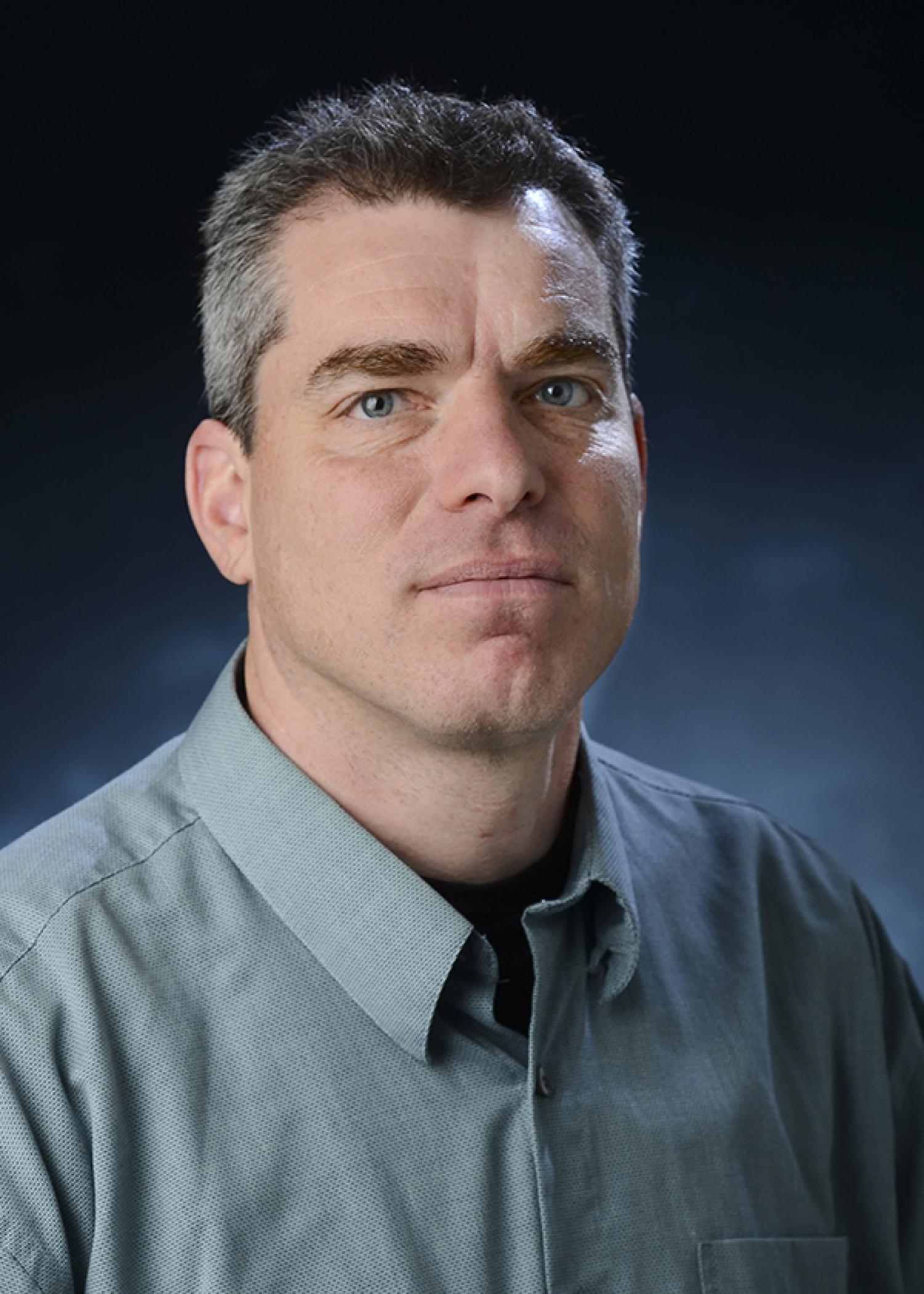
Rainer J. Fries is an Associate Professor at the Texas A&M University, affiliated with both the Cyclotron Institute and the Department of Physics and Astronomy. He holds a doctorate in theoretical physics from the University of Regensburg (2001) and has held prestigious fellowships including the Feodor Lynen Fellowship (2002-2003) and RIKEN/BNL Research Center RHIC Fellow (2006-2011). His research focuses on the Strong Nuclear Force, Quark-Gluon Plasma, and Quantum Chromodynamics (QCD), particularly at extreme temperatures and high-energy nuclear collisions.
- Education
- PhD in Theoretical Physics, University of Regensburg (2001)
- Dual BSc in Physics and Mathematics, University of Regensburg (1998)
Prof. Fries explores the behavior of quarks and gluons in relativistic heavy-ion collisions, such as those at the Relativistic Heavy Ion Collider (RHIC) and the Large Hadron Collider (LHC). His work spans from initial state dynamics to final state observables like shear viscosity, angular momentum transfer, and jet quenching in QGP. He leads the JETSCAPE collaboration, integrating multi-stage jet evolution frameworks with Bayesian inference for precision QCD studies.
Recent publications highlight his 15 most recent articles (2023-2025), covering topics like hybrid hadronization, photon-triggered jet tomography, and multi-scale jet-medium interactions. These works emphasize QGP transport properties, viscous hydrodynamics, and Bayesian calibration of nuclear collision models.
- Scientific Awards
- IUPAP Young Scientist Prize in Nuclear Physics (2007)
- Montague Scholar for Teaching Excellence (2008)
- NSF CAREER Award (2009)
- Invited JSPS Fellowship (2009-2010)
He has advised the research team including Stephen Robicheaux, Arjun Sengupta, and Cameron Parker. Active in workshop organization, he co-hosted events like Hard Probes 2020 and previous Hot Quarks conferences (2016, 2014, 2012). His work bridges theoretical nuclear physics with experimental programs at international facilities including CERN and Brookhaven National Laboratory.