معرفی
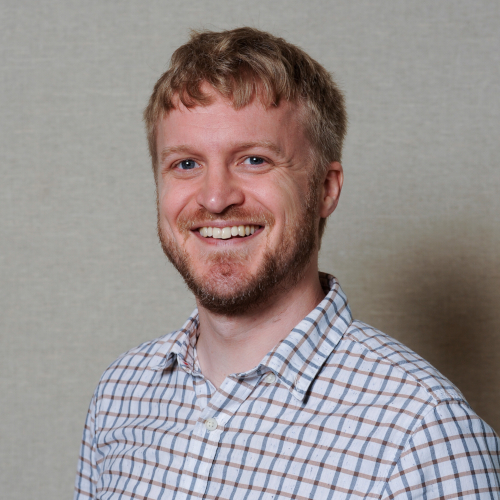
Rafael da Silva de Souza holds dual academic appointments as Associate Professor at the University of North Carolina at Chapel Hill (2024-2026) and primary affiliation with the University of Hertfordshire's School of Physics, Engineering & Computer Science. He chairs the Cosmostatistics Initiative and contributes to the Centre for Astrophysics Research (CAR), with prior positions at Shanghai Astronomical Observatory, University of North Carolina at Chapel Hill, Eotvos Lorand University, Korean Astronomy and Space Science Institute, and Kavli IPMU.
His educational background includes a PhD in Astrophysics from Universidade de Sao Paulo (2009), specializing in the Origin of Cosmological Magnetic Fields. Research interests focus on statistical methodologies in astrophysics, with key areas including:
- Astrostatistics and Bayesian modeling
- Machine learning applications for astronomical data
- Stellar cluster dynamics (open/globular clusters)
- Cosmic web structure analysis
- Extragalactic surveys and galaxy evolution
Recent publications demonstrate strong integration of statistical innovation with observational astrophysics, particularly in galaxy morphology classification, supernova cosmology, and stellar evolution studies. His work increasingly leverages machine learning for large-scale survey data interpretation across projects like Galaxy Zoo DECaLS and BASS/MzLS.
Key recognition includes the Prose Award for his Cambridge University Press book Bayesian Models for Astrophysical Data. He previously served as Vice-President of the International Astrostatistics Association.
Research leadership includes principal investigator roles for the MESCAL project (Multidimensional Exploration of Stellar Clusters via Automated Learning, 2020-2024) and MTA fellowship (2014-2016), with total research output exceeding 96 publications including 85 journal articles, 3 conference contributions, and a book.
His laboratory activities center around the Cosmostatistics Initiative, developing open-source tools for statistical astrophysics and fostering international collaboration in astrostatistics methodology.