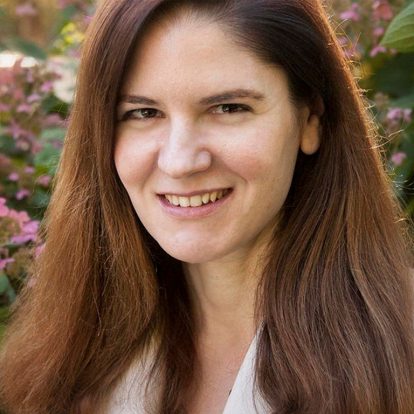
Rachel Devlin
استاد · Women's and Gender History
Rutgers, The State University of New Jerseyمعرفی
Rachel Devlin is Professor of History at Rutgers, The State University of New Jersey, where she has taught since 2011. Her scholarship focuses on the cultural politics of gender, race, and sexuality in modern America, with particular emphasis on girls' experiences in 20th-century social movements.
Her educational background includes a Ph.D. from Yale University (1998).
- Yale University: Ph.D. (1998)
Devlin's research interrogates how girlhood intersected with civil rights activism and postwar sexual politics. She examines the disproportionate role of young women in school desegregation battles while analyzing constructions of adolescent female sexuality through psychoanalytic, legal, and cultural frameworks. Her work reveals how race, gender, and age hierarchies shaped educational access and sexual regulation in mid-20th century America.
Her publications demonstrate consistent engagement with marginalized narratives in U.S. history, particularly highlighting girls' agency in civil rights struggles and the regulation of female adolescence. The body of work bridges women's history, critical race theory, and the history of sexuality through meticulous archival research on school desegregation, juvenile justice, and postwar family dynamics.
Her major recognitions include:
- Darlene Clark Hine Award Honorable Mention (2019)
- Lillian Smith Book Award (2019)
- ACLS Fellowship (2015-2016)
- Fletcher Fellowship at Harvard (2009-2010)
- Charles Warren Center Fellowship (2008-2009)
- SSRC Sexuality Research Fellowship (2000)
Professor Devlin teaches undergraduate courses including Women in American History II, Childhood in America, and Sexuality in America, alongside graduate seminars on U.S. history since 1850 and the history of sexuality. Her research has been consistently supported by competitive external funding, reflecting significant scholarly impact in her field through fellowships from major academic institutions and historical associations.
Her work remains deeply embedded in contemporary historical discourse through ongoing publication and teaching, though specific lab affiliations or team structures aren't documented in available materials.