معرفی
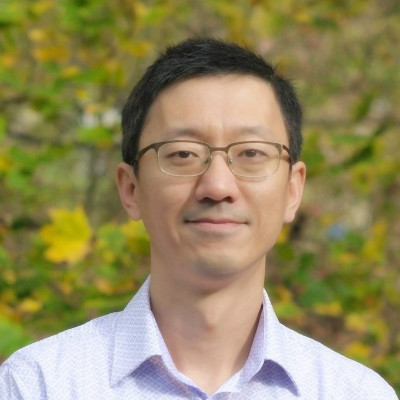
Qingxue Zhang is an Associate Professor in the Department of Electrical and Computer Engineering at the College of Engineering, Temple University. He brings over two decades of experience from academia, industry, and medical research, including postdoctoral work at Harvard University and leadership roles as a system architect and team manager in high-tech R&D. His interdisciplinary research bridges AI, chip design, and sensor technology for applications in precision medicine and smart environments.
His research interests include:
- AI - Brain-inspired
- AI - Theories and Algorithms
- Chip - Brain-inspired, MPSoC, ASIC
- Sensor - Wearable, Embedded, IoT
- Big Data
- Precision Medicine
- Smart World
Dr. Zhang's work is driven by the vision of AI-Chip-Sensor co-design, enabling next-generation intelligent systems. His research has been funded by major agencies including NSF CISE and NSF ENG, reflecting its innovation and impact. Although specific publications are not listed, his contributions span over 50 journals, conferences, and patents, indicating a strong and sustained output in these domains.
He has received several honors, including:
- National Science Foundation CAREER Award
- Best Paper Award
- Favorite Professor Award
Dr. Zhang is actively involved in academic service, serving as an Associate Editor for multiple IEEE journals and as a reviewer for top-tier publications including Nature Scientific Reports and various IEEE Transactions. He has also reviewed grants for approximately 20 NSF, NIH, and NIST panels. He has chaired or served on committees for leading conferences such as IEEE ICCE, IEEE IPCCC, and DAC. He leads the UbiEi Lab, fostering innovation and training the next generation of engineers and researchers.