معرفی
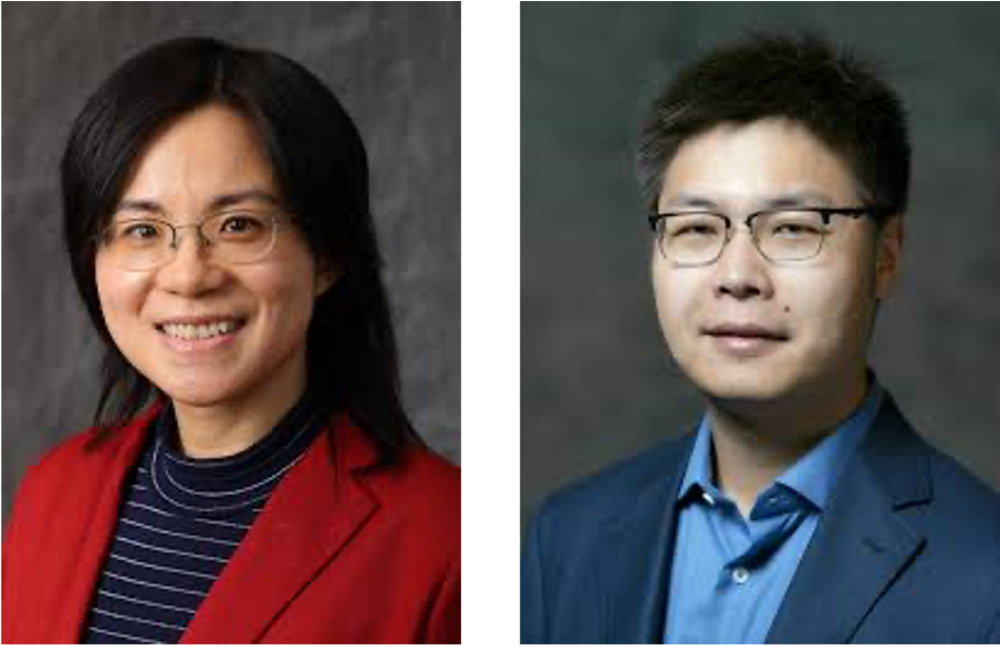
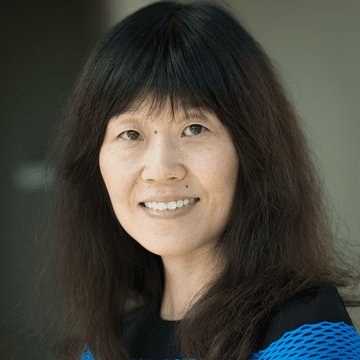
Qing Zhao is a Professor in the Department of Electrical and Computer Engineering at Cornell University's College of Engineering, where she holds the Joseph C. Ford Professor of Engineering title. She joined Cornell in 2015 after serving as a professor at UC Davis from 2004 to 2015. Her research bridges theoretical foundations in decision-making with practical applications in networked systems, infrastructure, and communications.
- B.S., Electrical Engineering, Sichuan University, 1994
- M.S., Electrical Engineering, Fudan University, 1997
- Ph.D., Electrical Engineering, Cornell University, 2001
- Postdoc, Electrical Engineering, Cornell University, 2004
Her research interests lie at the intersection of sequential decision theory, stochastic optimization, machine learning, and algorithmic theory, with applications in communications, power systems, and socio-economic networks. She specializes in multi-armed bandits, anomaly detection, online learning, and Bayesian optimization, developing frameworks for intelligent decision-making under uncertainty.
The recent 15 publications reflect a strong trend toward AI-driven solutions for infrastructure, particularly in grid monitoring, distributed energy systems, and federated learning. Her work emphasizes theoretical rigor (e.g., order-optimal regret, asymptotic efficiency) while addressing real-world constraints such as communication limits, privacy, and computational complexity in distributed and networked settings.
Notable scientific awards include:
- Fellow of IEEE
- Marie Skłodowska-Curie Fellow, European Union
- Jubilee Chair Professor, Chalmers University (2018–2019)
- Distinguished Lecturer, IEEE Signal Processing Society
- IEEE Signal Processing Magazine Best Paper Award (2010)
- Young Author Best Paper Award, IEEE Signal Processing Society (2000)
- UC Davis Chancellor’s Fellow
- Michael Tien ’72 Excellence in Teaching Award, Cornell (2022)
She has made significant contributions to research funding and leadership, particularly through her involvement in the AI Institute for Next Generation Food Systems (AIFS). Her work bridges academia and societal impact, with applications in smart grids, digital food safety, and resilient cyber-physical systems. She has advised numerous students and leads a research group focused on information, networks, and decision systems.
Her lab and team activities center on AI for infrastructure, including projects on grid monitoring with AI foundation models, federated learning for energy systems, and anomaly detection in hierarchical networks. These efforts are supported by interdisciplinary collaborations and focus on deploying machine learning in safety-critical and resource-constrained environments.
حوزههای پژوهشی