معرفی
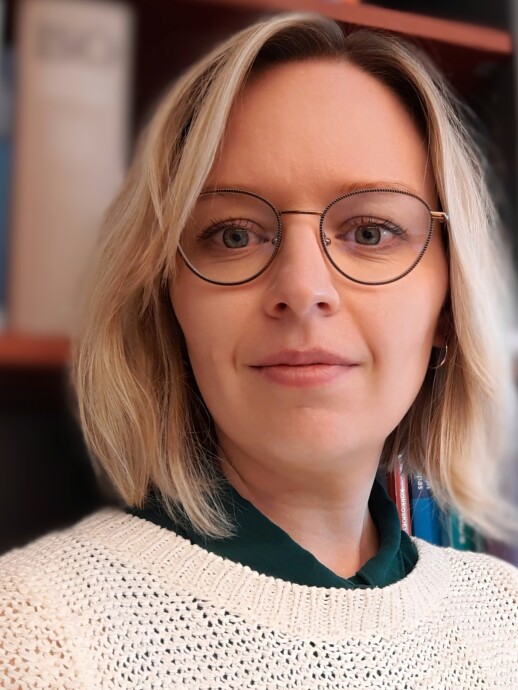
Piret Upser is a Research Fellow in Linguistic Anthropology at the Institute of Cultural Research, Faculty of Arts and Humanities, University of Tartu. She holds a Doctor's Degree in Linguistics (2025) and a Master's Degree in Estonian and Finno-Ugric Linguistics (2020), both from the University of Tartu. Her academic work focuses on spoken interaction, particularly in emergency and institutional contexts.
- Doctor of Philosophy (PhD), University of Tartu, 2025
- Master of Arts (MA), University of Tartu, cum laude, 2020
- Bachelor of Arts (BA), University of Tartu, 2018
Her research centers on linguistic anthropology, pragmatics, and conversation analysis, with a strong emphasis on Estonian emergency calls. She investigates interactional problems, politeness and impoliteness, response particles, and spatial referencing in high-stakes communication. Her work bridges theoretical linguistics with practical applications in emergency response training and language policy.
The 15 most recent publications reflect a consistent focus on emergency communication, multimodal interaction, and discourse in institutional settings. Her articles appear in journals and conference proceedings related to applied linguistics, pragmatics, and Estonian language studies, demonstrating expertise in both qualitative discourse analysis and real-world language use.
- Voldemar Siimon's Prize (2023)
- II prize of the National Student Research Competition (2020)
- Ants and Maria Silvere and Sigfried Pants Memorial Fund's Prize (2019)
Piret Upser has contributed to significant research projects such as "ARS MORIENDI ESTONIA 2030" and "Language in the digital age: spoken interaction and instant messaging." She is actively involved in academic service as a member of the Mother Tongue Society, the International Pragmatics Association, and the Estonian Copy Editors' Association. Her work includes advising on training programs for emergency response personnel and contributing to linguistic tools for crisis communication. She has no formal advisees listed but collaborates extensively with senior researchers in her field.
She is part of research teams analyzing spoken interaction in digital and institutional environments, with a focus on improving communication practices in emergency services and end-of-life care contexts.