معرفی
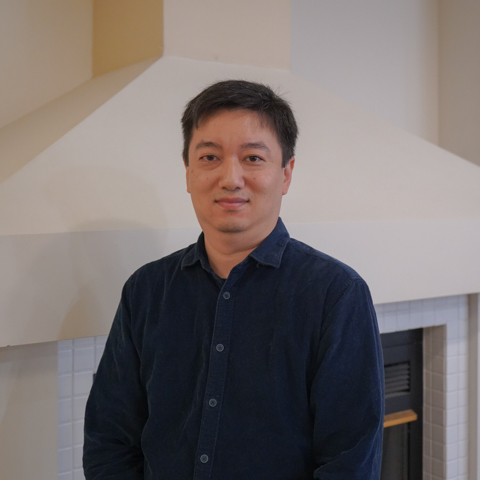
Pilgyu Kang is an Assistant Professor in the Department of Mechanical Engineering at George Mason University, with affiliate appointments in Bioengineering and Electrical and Computer Engineering. He is based at the Fairfax campus in the Nguyen Engineering Building, contributing to interdisciplinary research in advanced sensor technologies.
Education:
- PhD in Mechanical Engineering, Minor in Applied and Engineering Physics – Cornell University, Ithaca, NY
- MS in Mechanical Engineering – Carnegie Mellon University, Pittsburgh, PA
- BS in Mechanical Engineering, Minor in Electrical Engineering – Seoul National University, Seoul, South Korea
Dr. Kang's research focuses on the development of flexible and stretchable optoelectronic sensors using two-dimensional materials such as graphene and transition metal dichalcogenides (TMDs). His work integrates nanomaterials with photonic structures to enable next-generation wearable and implantable sensing platforms. Key areas include strain, pressure, biochemical, and ultrasound sensing with applications in healthcare and environmental monitoring.
His current research projects are supported by KRICT and the U.S. Department of Defense (DoD), targeting innovative applications such as hydrogen detection, virus sensing, and autonomic nerve stimulation using 3D porous graphene architectures. These efforts emphasize scalable fabrication techniques like laser photothermal nanoassembly and fluorinated polyimide conversion.
Dr. Kang previously served as a postdoctoral research associate in the Nam Research Group at the University of Illinois Urbana-Champaign, where he advanced graphene-photonic crystal integration and surface topography engineering for enhanced device performance.
Scientific Awards:
Dr. Kang advises students in mechanical engineering and interdisciplinary domains, guiding research in nanomaterial-based sensor design and fabrication. His lab pursues externally funded projects that bridge fundamental materials science with practical biomedical and defense applications. Current grants include:
- Laser Photothermal Nanoassembly of 3D Porous Graphene and Palladium Nanoparticles for High-performance Hydrogen Detection (KRICT)
- Highly Sensitive Photodetector based on Laser-generated 3D Porous Graphene from Fluorinated Polyimide (KRICT)
- Wearable Ultrasound System for Wound Assessment and Treatment (DoD)
- Aptamer-functionalized 3D porous graphene for rapid electrochemical detection of viruses
- Transparent 3D Porous Graphene Electrodes for Optically Identified Autonomic Nerve Stimulation
His research lab focuses on developing novel graphene-based optoelectronic systems, particularly those engineered for high stretchability and sensitivity. The team specializes in laser processing of nanomaterials, photonic integration, and surface engineering for next-generation flexible sensors.