معرفی
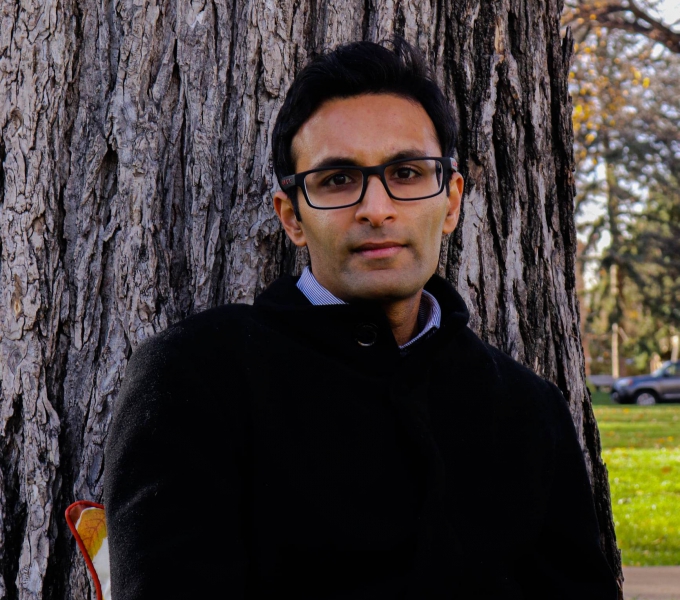
Peter W. Graham serves as Professor of Physics at Stanford University, leading research at the intersection of theoretical particle physics and experimental design since joining the faculty in 2010. His work bridges astrophysics, atomic physics, and solid-state techniques to probe fundamental physics beyond the Standard Model.
Education:
- Harvard University: AB and AM in Physics (2002)
- Stanford University: Ph.D. in Physics (2007), advised by Savas Dimopoulos
Graham's research program centers on developing novel experimental approaches for detecting dark matter candidates and solving theoretical puzzles. He pioneered the Cosmic Axion Spin Precession Experiment (CASPEr) using NMR techniques to detect axion dark matter and co-developed the DM Radio Pathfinder for hidden photon searches through precision magnetometry. His theoretical breakthrough in cosmological relaxation offers an elegant solution to the hierarchy problem by connecting electroweak scale dynamics to inflationary cosmology, generating significant discussion in particle physics circles. He also advanced gravitational wave detection methodologies using atom interferometry, demonstrating cross-disciplinary innovation.
Analysis of his publications reveals consistent focus on precision measurement technologies applied to fundamental physics questions, with recurring themes in dark matter phenomenology, quantum sensor development, and connections between cosmology and particle physics. His work demonstrates exceptional synergy between theoretical insight and experimental feasibility.
Scientific Awards:
- New Horizons in Physics Prize (2017) for developing new experimental tests of physics beyond the Standard Model
- Department of Energy Early Career Award (2014)
- Terman Fellow at Stanford University (2014)
Graham's research has been supported by significant funding including the DOE Early Career Award, enabling his leadership in multiple experimental collaborations. While specific grant details aren't provided, his CASPEr and DM Radio initiatives represent major multi-institutional efforts involving national laboratories and international partners. He maintains strong ties with the Stanford Institute for Theoretical Physics while actively collaborating with experimental groups to translate theoretical concepts into detector designs.
His research ecosystem includes the Stanford-based theoretical group developing detection frameworks and close partnerships with experimental teams building ultra-sensitive quantum sensors. The CASPEr collaboration spans multiple universities focusing on NMR-based dark matter detection, while DM Radio involves teams developing resonant cavity and lumped-element detectors for hidden sector particles, creating a robust infrastructure for next-generation fundamental physics experiments.