معرفی
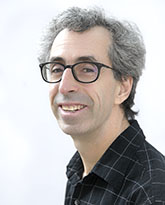
Professor Peter Kim is a Professor of Applied Mathematics in the School of Mathematics and Statistics at the University of Sydney. He is a member of the Applied Mathematics Research Group and the Charles Perkins Centre, focusing on interdisciplinary research that bridges mathematics with biological and medical sciences. His work aligns with the Faculty of Science Research Strengths in Fundamental Laws of Nature, Complex Systems, Precision and Digital Health, Understanding Disease & Disorder in Humans, and Data and Decisions.
Professor Kim's research spans mathematical biology with specific interests in mathematical immunology, cancer dynamics, virus dynamics, and human evolution. He applies ordinary, delay, and partial differential equations along with agent-based modeling techniques to address complex biological questions. His mathematical approaches enable deeper understanding of immune system regulation, cancer progression, and evolutionary mechanisms that shaped human life history.
Analysis of Professor Kim's recent publications reveals a strong interdisciplinary focus integrating mathematical techniques with biological applications. His work demonstrates sophisticated use of control theory in immunological contexts, modeling of evolutionary dynamics related to human longevity, and innovative approaches to cancer therapy optimization. The research consistently bridges theoretical mathematics with practical medical and biological applications.
- 2023: Unpacking the immune system with applied mathematics (ARC Discovery Project)
- 2019: Mathematical modelling unravels the impact of social dynamics on evolution (ARC Future Fellowship)
- 2018: SOAR Fellowship
- 2017: Dynamical systems theory and mathematical modelling of viral infections (ARC Discovery Project)
- 2015: Human longevity: Modelling social changes that propelled its evolution (ARC Discovery Project)
Professor Kim has mentored numerous PhD, Masters, and Honours students including Collin Zheng, Adarsh Kumbhari, and Pantea Pooladvand. His international collaborations span Korea (Hanyang University), the United States (City of Hope and Beckman Research Institute, University of Utah), and Australia. He has co-supervised students with clinicians and biologists, fostering truly interdisciplinary research.
As part of the Applied Mathematics Research Group, Professor Kim leads projects on targeted radionuclide therapy, evolution of human post-menopausal longevity (Grandmother Hypothesis), evolution of mating strategies, mathematical modeling of immune dynamics, cancer vaccines, and cancer virotherapy. His research group maintains strong connections with medical researchers at St Vincent's Public Hospital and international collaborators in cancer immunology and evolutionary anthropology.