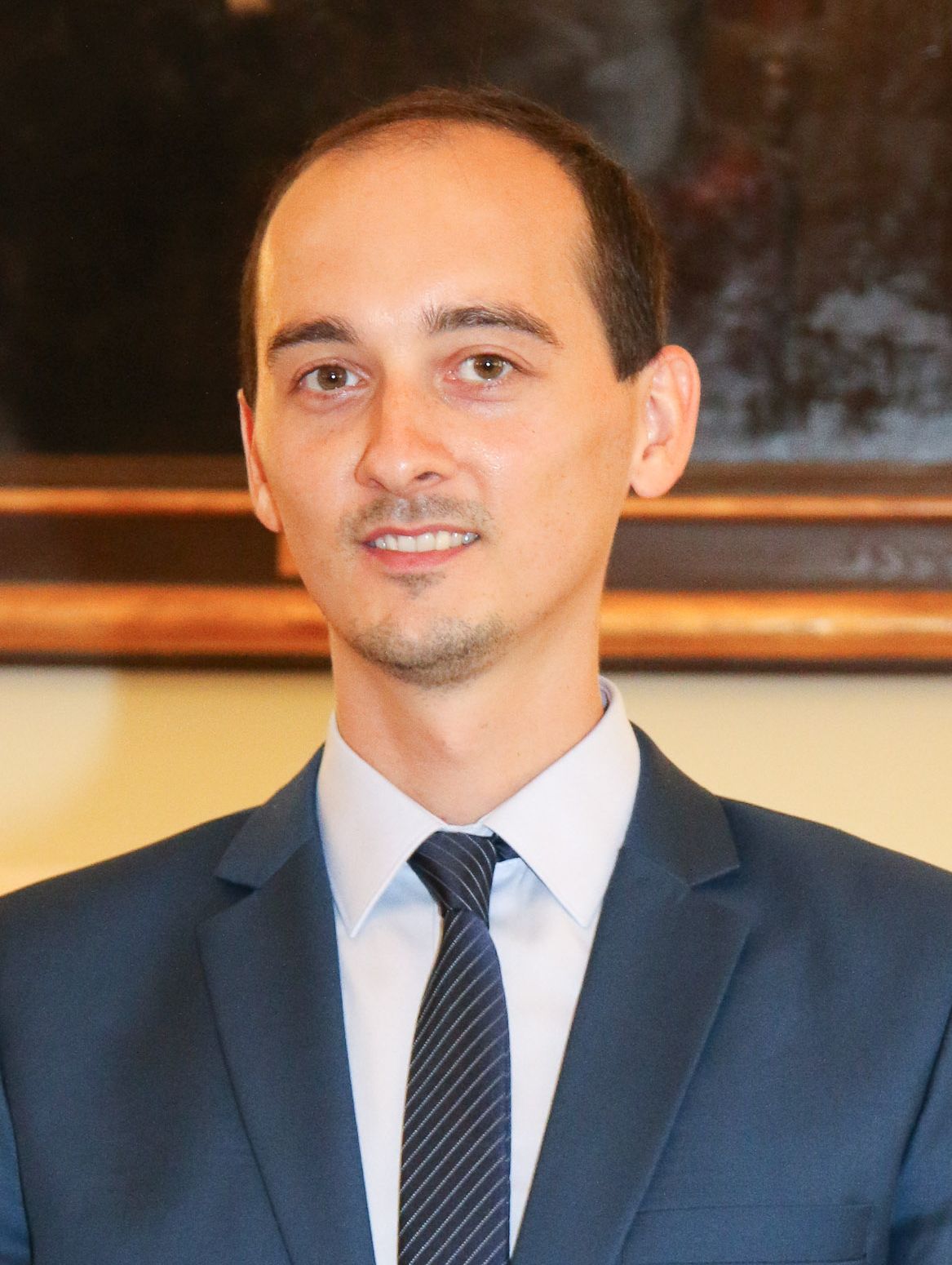
Peter Apor
استادیار · Social and cultural history
Károli Gáspár University of the Reformed Churchمعرفی
Peter Apor is an Assistant Professor of History at Károli Gáspár University of the Reformed Church in Hungary, where he works in the Faculty of Humanities, Institute of History, Department of Modern and Contemporary World History. Previously, he served as a Researcher for EUNAMUS: National Museums in Europe, a project supported by the 7th Framework Programme of the European Union.
Dr. Apor received his PhD in History from the European University Institute, Florence in 2002, with his dissertation titled "Corpus Communismi Mysticum: History, Politics and Continuity in Communist Hungary." His MA in History was obtained from ELTE BTK (Eötvös Loránd University, Faculty of Humanities) in 1995. He also completed additional studies in Hungarian Linguistics and Literature at ELTE (1997) and History at Central European University (1996).
Dr. Apor's research focuses on the social and cultural history of Hungary and East Central Europe in the second half of the 20th century, with particular emphasis on communist and post-communist periods. His work explores historical memory, the construction of political narratives, and the relationship between history and politics. He employs interdisciplinary approaches, drawing from historical anthropology, cultural studies, and political science to examine how historical events are remembered, represented, and instrumentalized in different political contexts. His scholarship consistently investigates the connections between key historical moments, especially the relationship between the 1919 Hungarian Soviet Republic and the 1956 Hungarian Uprising.
His extensive publication record demonstrates a consistent focus on the continuity between key historical moments in Hungarian history, particularly the connections between the 1919 Hungarian Soviet Republic and the 1956 Hungarian Uprising. His work frequently examines how communist regimes constructed historical narratives to legitimize their rule, and how post-communist societies have grappled with processing and representing the communist past through museums, cinema, literature, and academic historiography. His research spans multiple subfields including visual history, everyday life studies, ethnic minority policies, and the politics of historical memory.
Dr. Apor serves as an editor for the Hungarian Historical Review (since 2013) and is an active member of EURHISTXX, the European contemporary history network (since 2005), where he serves on the organizing committee. His scholarly contributions have established him as a significant voice in the field of contemporary East European history, with his edited volumes including "Narratives Unbound: Historical Studies in Post-Communist Eastern Europe" (2007), "Past for the Eyes: East European Representations of Communism in Cinema and Museums after 1989" (2008), and "The Sovietization of Eastern Europe: New Perspectives on the Postwar Period" (2008).