معرفی
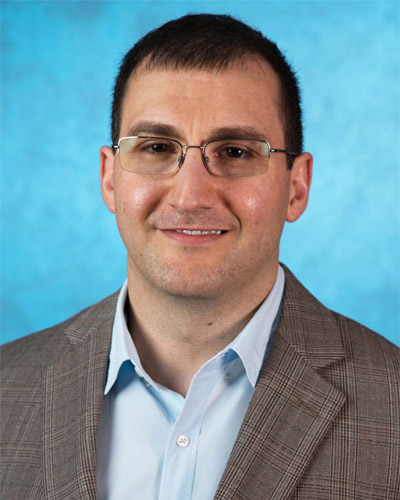
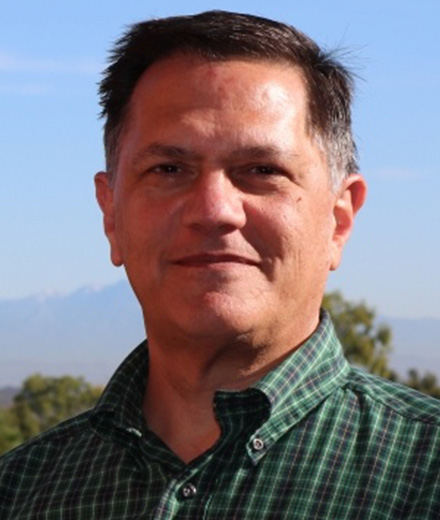
Dr. Paul T. Buonora is a Professor of Chemistry and Biochemistry at California State University, Long Beach, holding this position since 2000. He serves as the Undergraduate Advisor for the department and teaches advanced courses including Physical Organic Chemistry (CHEM 421/521), Advanced Organic Chemistry Laboratory (CHEM 420), and Organic Chemistry I & II (CHEM 320A/B). His academic career centers on synthetic organic chemistry with direct applications in medicinal compound development.
His research program specializes in synthetic organic methodology, emphasizing general transformations and catalysis by small molecules in microenvironments. A major focus involves library synthesis of γ-dicarbonyl derived fragments critical to pharmacologically active compounds such as matrix metalloproteinases inhibitors and cyclic nucleotide phosphodiesterase inhibitors. The group utilizes Meyers' bicyclic lactams as chiral scaffolds, developing mild cleavage methods previously hindered by harsh reaction conditions to access structurally complex heterocycles with controlled stereochemistry.
Analysis of his publication record reveals consistent emphasis on heterocyclic chemistry—particularly dihydropyridazines and pyridazinones—with strong translational potential in medicinal chemistry. His work bridges fundamental organic synthesis and drug discovery, characterized by frequent undergraduate co-authorship that underscores his commitment to student research training.
Dr. Buonora maintains active membership in multiple American Chemical Society divisions (Chemical Education, History of Chemistry, Medicinal Chemistry, Organic Chemistry), Sigma Xi, Phi Lambda Upsilon, and the History of Science Society. No specific scientific awards are documented in the source material.
He has mentored 24 documented students to successful careers across chemistry, medicine, and industry, with alumni placed at Merck, FMC Corporation, Millennium Pharmaceuticals, and academic institutions including UC Santa Barbara and Oregon State University. His research program explicitly prioritizes student development, with graduates entering PhD programs, medical/dental schools, or direct industry roles in petrochemical, fine chemical, and pharmaceutical sectors. Grant details are not provided in the source text.
The research group operates within CSULB's Chemistry & Biochemistry department, focusing on innovative catalytic routes for biologically relevant molecules. Their current efforts target γ-dicarbonyl fragment synthesis for inhibitor development, leveraging microenvironment effects and small-molecule catalysis to achieve transformations applicable to drug discovery pipelines.