معرفی
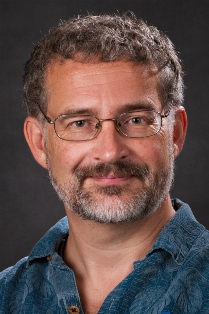
Paul King is an Associate Professor in the Department of Physics and Astronomy at Ohio University's College of Arts and Sciences, where he conducts experimental nuclear and particle physics research. He is affiliated with the Institute of Nuclear and Particle Physics and conducts experiments at Jefferson Lab (JLab), particularly in Halls A and C, focusing on parity-violating electron scattering to probe fundamental symmetries and nucleon structure.
- Ph.D., College of William and Mary in Virginia (2000)
His research centers on precision tests of the Standard Model through experiments such as MOLLER, PREX, CREX, Qweak, and G0. These involve measuring parity-violating asymmetries in electron scattering to determine neutron skins, weak form factors, and strange quark contributions in nucleons. His work bridges nuclear structure physics and fundamental electroweak interactions.
The recent publications highlight a strong focus on precision measurements of parity violation and spin asymmetries across various nuclei (Pb-208, Ca-48, Al-27, C-12) and the proton, utilizing advanced electron scattering techniques at JLab. These studies contribute significantly to understanding neutron distributions, weak charges, and hadronic structure effects like two-photon exchange.
Notable scientific contributions include high-impact publications in Nature and Physical Review Letters, particularly the precision measurement of the proton’s weak charge and the determination of neutron skins in heavy nuclei. These results are central to modern nuclear physics and tests of the Standard Model.
King advises research through collaboration in large experimental groups; specific students are not listed. His work is supported by major national laboratories and involves significant instrumentation development, particularly for parity-violation detection systems. He is actively involved in ongoing experiments and data analysis, indicating sustained research momentum.
He is based at the Edwards Accelerator Lab at Ohio University and maintains a secondary office at Jefferson Lab, reflecting his dual institutional engagement in experimental nuclear physics.