معرفی
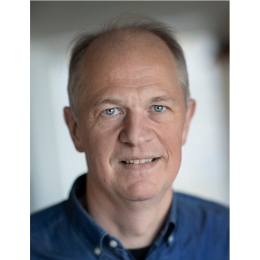
Paul Barklem is a Professor in the Department of Physics and Astronomy at Uppsala University, Sweden, specializing in Astronomy and Space Physics. His research focuses on stellar atmospheres, atomic processes, and the chemical evolution of the Milky Way.
Originally from Australia, Barklem was born in Melbourne and grew up in Brisbane. He completed his physics studies at the University of Queensland before moving to Uppsala University where he has established his academic career. His professional background bridges atomic physics and astrophysics, with a strong emphasis on theoretical calculations and experimental validation.
Barklem's research centers on stellar spectroscopy and the theory and calculation of atomic and molecular processes, particularly collision processes. He frequently tests theoretical calculations through experiments conducted at the DESIREE facility. His work has significant applications for understanding stars and their environments, the evolution of chemical elements, and the history of the Milky Way. He actively contributes to major astronomical missions including the PLATO space telescope mission and the Gaia-ESO spectroscopic survey.
His recent publications demonstrate a strong focus on non-LTE modeling of stellar atmospheres, with particular attention to elements like copper, beryllium, yttrium, and europium. He has made significant contributions to understanding mutual neutralization processes at low energies, which are critical for accurate stellar abundance determinations. His work bridges atomic physics and astrophysics, providing essential data for interpreting stellar spectra.
Barklem teaches Classical Mechanics for Engineers, Theoretical Astrophysics, and Astrochemistry at Uppsala University. His teaching reflects his research expertise, connecting fundamental physics with cutting-edge astronomical applications. He maintains an active research group that contributes to both theoretical developments and experimental validations of atomic processes relevant to stellar astrophysics.
He is deeply involved with the DESIREE (Double ElectroStatic Ion Ring Experiment) facility, which enables cryogenic merged-beam experiments to study ion-atom and ion-molecule interactions at very low energies. This experimental work complements his theoretical research on atomic collision processes and provides crucial data for non-LTE modeling in stellar atmospheres. His GitHub repositories contain valuable resources for the astronomical community, including atomic data and computational tools for stellar spectroscopy.