
معرفی
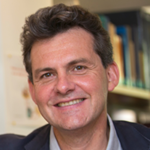
Paul-Antoine Hervieux is a Distinguished Professor of Physics at the University of Strasbourg, where he has been working since 2004 at the Institute of Physics and Chemistry of Materials (IPCMS). His academic career spans theoretical physics with a focus on ultrafast optics, nanophotonics, and quantum phenomena. He has held significant administrative roles including coordinator of the international graduate school QMat (Quantum Science and Nanomaterials) since 2020, member of the administration committee of Presses universitaires de Strasbourg, and previously served as deputy vice-president of research of the Strasbourg University (2013-2018).
Hervieux received his PhD in Atomic Physics from Grenoble University in 1992 with a dissertation titled "Theoretical and experimental studies of the excitation of multiply charged ions by electron impact." He completed his "Ability to Direct Research" at Metz University in 1999 with research on particle-metal cluster interactions. His academic journey began with a Master in Nuclear and Particle Physics from UJF-Grenoble I in 1989, followed by PhD studies at CEA Grenoble, a postdoc at Hahn-Meitner-Institut in Berlin, and positions at Metz University before joining Strasbourg University.
Hervieux's research spans multiple cutting-edge areas in theoretical physics. Initially focused on atomic and molecular collision theory, he transitioned to studying metallic clusters and their interactions with various particles. Since 2004, his work has centered on modeling light-matter interactions in nanostructured materials, with particular emphasis on ultrafast charge and spin dynamics in nanostructures. His current research directions include antimatter physics around the GBAR experiment (measuring gravity's effect on antimatter), creating classical analogues of open quantum systems using Brownian particles, nuclear spin qudits for quantum information processing, and femtosecond control of skyrmions in topological materials. His work combines theoretical modeling with experimental collaborations across disciplines from condensed matter physics to quantum information science.
Analysis of Hervieux's recent publications reveals a strong interdisciplinary focus bridging quantum information, condensed matter physics, and particle physics. His work shows consistent themes in quantum dynamics, nanoscale phenomena, and ultrafast processes. Key trends include the application of quantum information concepts to material science, the exploration of classical-quantum analogies, and the development of theoretical frameworks for emerging quantum technologies. His research demonstrates increasing collaboration across international boundaries and disciplinary silos, particularly evident in the large multi-institutional papers related to the GBAR antimatter experiment.
Hervieux has made significant contributions to theoretical physics through his extensive publication record and leadership in major research initiatives. While specific awards aren't detailed in the provided text, his role as a Distinguished Professor (PRCE2) since 2017 and his leadership positions indicate significant recognition within the academic community. His involvement in high-profile projects like GBAR and QUSTEC suggests he has received substantial research funding and recognition for his contributions to physics.
As an academic leader, Hervieux has supervised numerous students and researchers, though specific names aren't provided in the text. His teaching portfolio includes Analytical Mechanics (L2), Quantum Mechanics (L3), History of Physics (M1), and General Relativity (M1). His administrative responsibilities have included coordinating graduate programs, serving on university committees, and representing France in international research collaborations such as the COST action CM0702. These roles demonstrate his commitment to academic leadership and the development of future physicists.
Hervieux leads research within the Ultrafast Optics and Nanophotonics group at IPCMS, collaborating closely with researchers from ISIS (Institut de Science et d'Ingénierie Supramoléculaires) and international partners including KIT (Karlsruhe Institute of Technology) and the University of Liège. His work on classical analogues of quantum systems involves experimental teams working with optically trapped Brownian particles, while his quantum information research connects with chemists studying single-molecule magnets. This collaborative approach places him at the intersection of theoretical physics, materials science, and quantum technology development.
Paul-Antoine HERVIEUX در سایتهای دیگر
جستوجوهای مرتبط
شاید اینها هم برایتان مناسب باشند
- GGiovanni ManfrediFritz Haber Institute of the Max Planck Society · استاد پژوهشی
- GGiovanni MANFREDIUniversity of Strasbourg · پژوهشگر
 Valérie HALTE-FILIPPIFritz Haber Institute of the Max Planck Society · استاد
 Jérémie LeonardFritz Haber Institute of the Max Planck Society · پژوهشگر
 Alberto BARSELLAFritz Haber Institute of the Max Planck Society · استادیار
 Lorry ENGELFritz Haber Institute of the Max Planck Society · مدرس پارهوقت