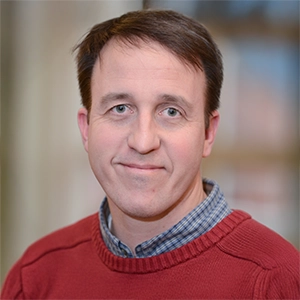
معرفی
Dr. Paul A. Moore is a Professor in the Department of Biological Sciences at Bowling Green State University's College of Arts and Sciences. He directs the Laboratory for Sensory Ecology, a multi-disciplinary research group investigating how organisms acquire and respond to environmental information, primarily through chemical senses in crustaceans. His research spans physics, sensory biology, ecology, and behavior, with collaborations extending to Woods Hole, Stony Brook, Berkeley, Milwaukee, and the Bahamas.
Moore's research interests center on chemical ecology and behavior of aquatic organisms, particularly focusing on sensory behavior, evolution, physiology, and ecology. His work examines how chemical signals influence ecological roles, including predator avoidance, habitat and mate selection, dominance hierarchies, and other social behaviors. The laboratory employs a truly multi-disciplinary approach, combining techniques from physics to chemistry to psychology, utilizing equipment designed for laboratory, field, and oceanic work.
His recent publications demonstrate consistent research output across chemical ecology, predator-prey interactions, ecotoxicology, and hydrodynamics. The work shows a progression from fundamental studies of odor plume dynamics to applied research examining anthropogenic impacts on aquatic organisms. His research connects physical aspects of chemical signal transmission with behavioral and ecological consequences, creating a comprehensive framework for understanding chemical communication in natural environments.
- Chemical Orientation Strategies influenced by hydrodynamics
- Landscapes of fear and safety in predator-prey interactions
- Neurobiological mechanisms of chemical sensing
- Ecotoxicological impacts of pollutants on behavior
- Hydrodynamics of odor plumes in natural environments
- Orientation and homing behaviors in aquatic organisms
Moore has mentored numerous graduate students through successful completion of their degrees, with many becoming faculty members at other institutions. His advising philosophy emphasizes independent thinking, creativity, and hard work, with structured timelines for both Master's and PhD students. The Laboratory for Sensory Ecology maintains a complex aquatic research system requiring regular upkeep by all lab members, reflecting the collaborative nature of the research environment.