معرفی
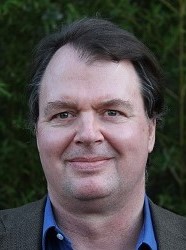
Patrick C. McGuire is a Research Fellow at the University of Reading's Department of Meteorology and National Centre for Atmospheric Science (NCAS), where he has worked since 2017. His research spans terrestrial climate science and planetary exploration, with dual appointments reflecting his interdisciplinary work in the Department of Meteorology and formerly in Geography & Environmental Science.
McGuire's primary research interests focus on land surface processes and climate science, remote sensing and atmospheric correction of orbital imaging data, Mars and planetary science, and computer vision applications. He leads advanced modeling efforts using JULES (Joint UK Land Environment Simulator) and the Unified Model for global land surface simulations, with recent emphasis on crop modeling in the Peruvian Andes using AquaCrop under climate change scenarios. His work integrates CORDEX and CHELSA downscaled climate data with advanced modeling techniques.
His research portfolio demonstrates remarkable breadth, connecting terrestrial climate modeling with Mars exploration through projects like the 'Cyborg Astrobiologist' computer vision system. Current collaborations include the EXPECT project for regional climate explanation, CROPP for climate resilience in Peru, SPLICE for canopy light interactions, and multiple Global Carbon Project initiatives including TRENDY MIPs. McGuire has made significant contributions to Mars mission data analysis, particularly with CRISM instrument atmospheric correction algorithms.
- SciVal top-five highly-cited author at Reading (128 citations/paper, 2019-2024)
- NASA Tech Brief and NTR Software Awards for Mars imaging technology
- Humboldt Research Fellowship (2008-2010)
- Multiple Weather Game contest placements at Reading (2021-2024)
As an active mentor, McGuire advised Nikita Agrawal's wildfire prediction project that won 3rd place at the Regeneron International Science & Engineering Fair. He regularly serves as a journal referee for Geoscientific Model Development, Water, Atmosphere, and Nature Geoscience, and participates in numerous model intercomparison projects including TRENDY, European Drought 2018 MIP, and Soil Parameter MIP. His laboratory work centers on the Land Surface Processes research cluster, utilizing the CEDA JASMIN supercomputing infrastructure for large-scale climate simulations and evaluation through tools like ILAMB and AutoAssess.