معرفی
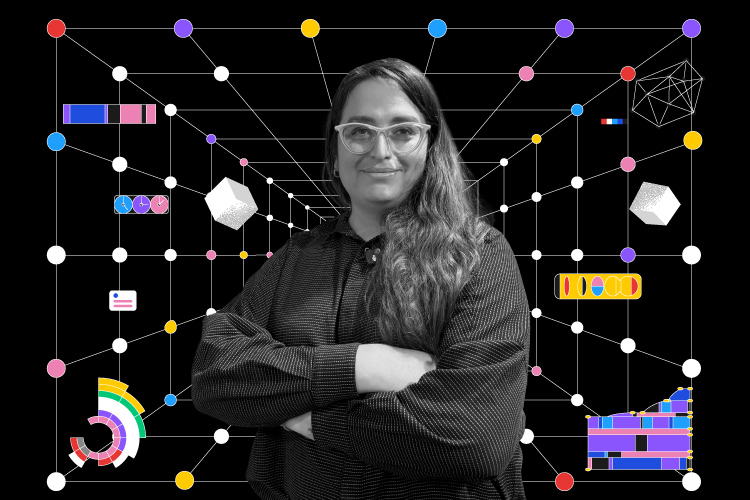
Paola Ricaurte is a Professor in the Department of Media and Digital Culture at the School of Humanities and Education, Monterrey Institute of Technology. She serves as a Faculty Associate at Harvard University's Berkman Klein Center for Internet & Society and represents Mexico in the OECD's Global Alliance for Artificial Intelligence.
- Institution: Monterrey Institute of Technology
- School: School of Humanities and Education
- Department: Department of Media and Digital Culture
- Additional Affiliations: Faculty Associate, Berkman Klein Center for Internet & Society (Harvard University); Member, Mexican Expert Committee in Global Alliance for AI (OECD)
Ricaurte is a leading Latin American activist against hegemonic technological systems that deepen global injustices. Her research examines how AI systems reproduce systemic inequalities, particularly focusing on data-driven modeling biases that exclude women and linguistic diversity. She argues commercial AI is built on principles of economic benefit, making it extractivist, patriarchal, racist and colonialist, with internet data reflecting only hegemonic knowledge rather than true human diversity.
Her work analyzes how AI trends emerging from an unequal world impact governance and individuals, especially marginalized communities. The Decolonial Artificial Intelligence Manifesto she authored forms the foundation of her advocacy for technologies that serve diverse populations while preserving ancestral knowledge. Ricaurte coordinates the Feminist AI Research Network (FAIR), which creates feminist action research agendas by and for women across the Global South.
- Key Publication: Manifiesto de la Inteligencia Artificial descolonial (2024)
Ricaurte envisions an inclusive AI future where Indigenous communities develop their own databases and technologies to achieve sovereignty. She advocates for Latin American technological sovereignty, citing successful examples like tools developed with Mexico's Yaqui tribe for water governance, demonstrating how region-specific technologies can solve local problems without colonial, patriarchal, or capitalist logic.