معرفی
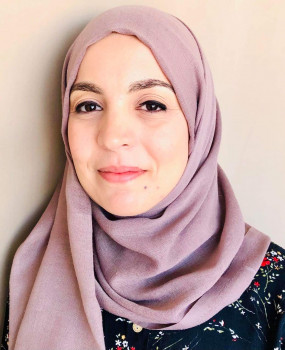
Prof. Dr. Onur Kaya is a Professor and Dean of the Faculty of Engineering and Natural Sciences at Işık University in Istanbul, Turkey. He leads the Department of Electrical and Electronics Engineering and has been a faculty member since 2005. His academic leadership extends to the Engineering Deans Council of Turkey where he serves on the executive board.
- Işık University, Faculty of Engineering and Natural Sciences (2005-present)
- University of Maryland, College Park (PhD, MS)
- İhsan Doğramacı Bilkent University (BS)
Prof. Kaya's research spans wireless communication theory and information theory with particular focus on multi-user systems, semantic/goal oriented communication, and energy harvesting networks. His work addresses fundamental challenges in 6G development, physical and MAC layer protocol design, cognitive radio systems, and age of information metrics. His research bridges theoretical information theory with practical communication system design, particularly in cooperative and energy-constrained wireless networks.
His publication record shows a clear evolution from fundamental information theory work on cooperative multiple access channels to contemporary research on semantic communication, age of information, and energy harvesting systems. Recent publications demonstrate increasing focus on practical applications for next-generation wireless systems, particularly in the areas of goal-oriented communication and timeliness metrics.
- IEEE WCNC 2008 Best Paper Award
- Outstanding Achievement Award in Education, Işık University
Prof. Kaya has successfully secured multiple TÜBİTAK 1001 research grants as principal investigator, focusing on cooperative communication systems and energy harvesting wireless networks. He has advised numerous PhD and master's students whose theses address various aspects of cooperative communication protocols, resource allocation, and energy harvesting systems. His research group has made significant contributions to cooperative multiple access channel theory and its practical implementations.
His laboratory work focuses on implementing cooperative diversity techniques, resource allocation algorithms, and semantic communication protocols for wireless networks, with applications in IoT, 5G/6G, and energy-constrained systems.