معرفی
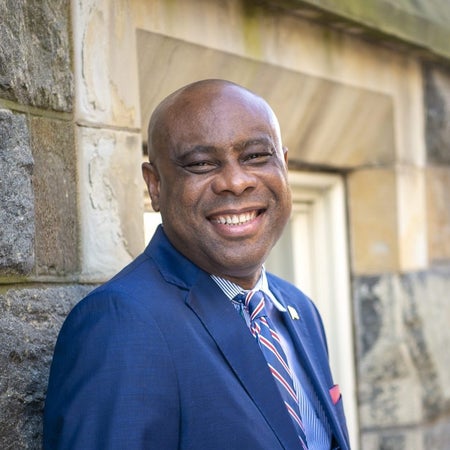
O. Felix Obi is an Adjunct Professor of Economics at the City University of New York (CUNY), where he teaches Global Trade and Political Economy. He is also a key member of the Executive Office of the U.S. President’s Trade Advisory Committee on Africa (TACA) under the Office of the U.S. Trade Representative (USTR), where he formulates and advises on U.S. international trade policy, particularly in Africa. His work involves trade negotiations, policy evaluation, and fostering public-private partnerships to enhance U.S. competitiveness in global markets.
His research interests center on International Political Economy (IPE), focusing on how politics shapes global trade and how economic exchange influences political outcomes. Key areas include the distributive consequences of trade, the interplay between social systems and governance, and the paradox between resistance to free trade and the desire for export growth. His scholarship examines the institutions and interests that shape trade policy and global economic dynamics.
Felix Obi holds a B.S. in Global Business Management and Public Policy from the University of Maryland and an MPM from Georgetown University's McCourt School of Public Policy (2011). He has held significant public service roles, including as Commissioner/Chair of Maryland’s Economic & International Trade Development Taskforce and as an Economic Development Fellow at the U.S. Department of Commerce. He is actively involved in Georgetown University alumni leadership, serving on the McCourt School Alumni Board and as Co-Chair of the Campus Engagement Committee for the Alumni Association.
His notable scientific recognition includes being named a 2021 Bowe Fellow by the World Trade Center Institute’s EDGE Program. He is particularly proud of his leadership in the U.S.-Kenya Trade and Investment Partnership (STIP), which aims to create a model for future U.S.-Africa trade agreements. He also led initiatives aligning Maryland’s BioHealth sector with federal foreign policy priorities.
While engaged in high-level policy and academic instruction, there is no indication of formal graduate student advising or active research grants. He does not appear to lead a lab or research team. His public contributions are primarily in policy formulation, trade diplomacy, and academic teaching.