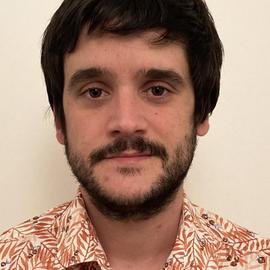
O-Jong Kim
استادیار · Nano-satellite development and operation
University of Hawaiʻi at Mānoaمعرفی
O-Jong Kim is an Assistant Professor in the Department of Aerospace Engineering at Sejong University, specializing in satellite navigation systems and precise positioning technologies. His research bridges theoretical advancements with practical applications in aerospace engineering, particularly focusing on CubeSat development and GNSS technologies.
His educational background includes:
- B.A. from Seoul National University (2011)
- M.A. from Seoul National University (2013)
- Ph.D. from Seoul National University (2018)
Dr. Kim's research interests center on nano-satellite development and operation, alternative positioning navigation and timing systems, indoor precise positioning, and GNSS receiver technology. His work addresses critical challenges in navigation systems, particularly in urban and indoor environments where traditional GNSS signals face significant limitations due to signal obstructions and multipath effects.
Analysis of his recent publications reveals a strong focus on practical navigation solutions, with particular emphasis on multipath mitigation techniques, CubeSat-based navigation systems, and alternative positioning approaches for emerging applications like Urban Air Mobility. His research demonstrates consistent progression from theoretical algorithms to field-tested implementations, with publications showing increasing citation impact.
Dr. Kim has established productive research collaborations, particularly with Seoul National University colleagues, evidenced by his extensive co-authorship network. His research output shows steady growth, with significant publication activity in 2020, 2023, and 2024, indicating active research momentum and sustained scholarly productivity.
His major achievements include the design, development, launch, and in-orbit operation of the SNUGLITE cubesat, and the development of single-transmitter-based positioning systems for alternative navigation and indoor navigation applications. These accomplishments demonstrate his ability to translate theoretical research into operational space systems.