معرفی
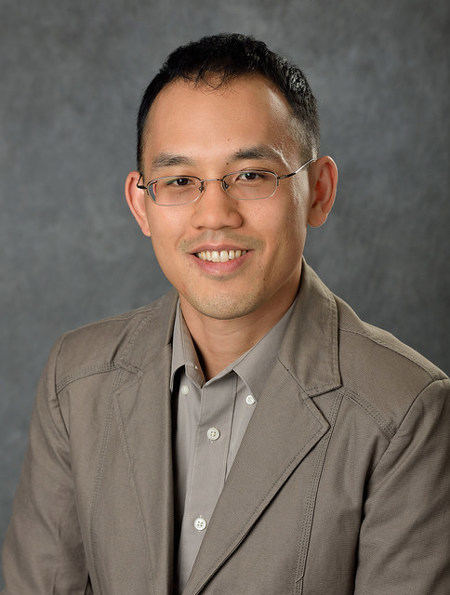
Noah Rosenberg is a Professor of Population Genetics and Society at Stanford University, affiliated with the Department of Biology. His research focuses on mathematical, theoretical, and computational approaches to evolutionary biology and genetics. Rosenberg leads the Rosenberg Lab, which addresses population-genetic problems through modeling, statistical methods, and data analysis. His work spans topics including microbial community variability, phylogenetic tree enumeration, and admixture dynamics.
- Education: BA in Mathematics (Rice University, 1997), MS and PhD in Mathematics and Biology (Stanford University, 1999–2001), Postdoc in Molecular/Computational Biology (USC, 2005).
Research interests include population genetics, evolutionary processes, computational methods, and applications to human and microbial diversity. Key contributions involve statistical tools like FAVA for microbiome analysis and FSTruct for population structure inference.
Recent articles highlight work on labeled histories of phylogenetic trees, biodiversity metrics, forensic genetics imputation, and clustering algorithms. Rosenberg has advised numerous PhD students and postdoctoral researchers, contributing to studies on admixture, coalescent theory, and phylogenetic networks.
His lab collaborates on projects involving tiger genomic diversity, cultural evolution in chess strategies, and the decoupling of genetic admixture from phenotypic traits. The lab’s work has been recognized in special journal issues and international conferences.