معرفی
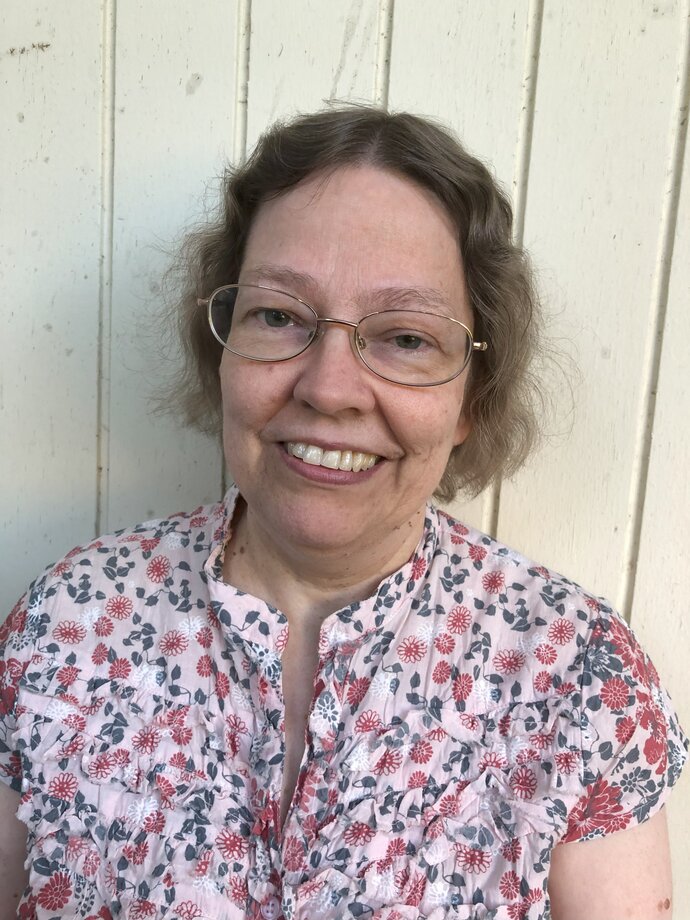
Dr. Nienke Vos serves as a tenured Assistant Professor and Senior Lecturer in Early Christian Greek and Latin at Vrije Universiteit Amsterdam's Faculty of Social Sciences and Humanities, where she is an active member of the Amsterdam Centre for Ancient Studies and Archaeology (ACASA). Her academic profile integrates textual analysis with linguistic methodologies to examine early Christian religious traditions.
Education:
- PhD Theology (Church History), University of Utrecht (2003)
- Duke University, North Carolina (2002)
- BA + MA Theology (degree of drs), University of Utrecht (1998)
- Divinity School (completion of ministry training for PKN), Protestant Church Netherlands (1998)
- Wycliffe Hall, Oxford (1993-1994)
- Propedeuse Theology, University of Utrecht (1990)
- Grammar School, Christelijk Gymnasium Utrecht (1983-1989)
Her research centers on early Christian hagiography and scriptural interpretation, with specialized focus on the Apophthegmata Patrum (desert fathers/mothers sayings). She pioneers applications of discourse linguistics and narratology to religious texts, examining how linguistic structures convey theological meaning in works like Sulpicius Severus' Vita Martini. This interdisciplinary approach bridges theology, literary criticism, and historical analysis.
Analysis of her 2011-2022 publications reveals consistent engagement with demonology, ritual studies, and mystagogical practices in early Christianity. Key thematic threads include the ambiguity of the devil in narrative contexts, body symbolism in religious experience, and argumentative techniques in hagiographic literature. Her work demonstrates increasing interdisciplinary synthesis between textual scholarship and anthropological approaches to ritual.
Key recognitions:
- Fulbright Grant NACEE (2002)
- Aspasia Travel Grant (2019)
Dr. Vos has supervised one PhD thesis while maintaining active academic service through 53 documented activities including conference organization (Oxford Patristic Conference 2024), peer review for journals like Religions, and expert workshops on religious narrative. Her research is strategically supported by competitive grants enabling international collaboration in ancient studies.
As a core member of ACASA, she contributes to interdisciplinary research teams connecting textual analysis with archaeological evidence, particularly through projects examining material culture of early Christian worship spaces and ritual objects across Mediterranean contexts.