معرفی
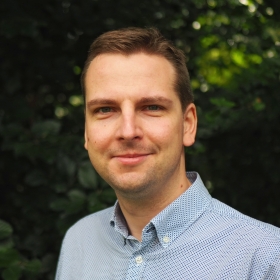
Nicky Rogge serves as an Associate Professor at KU Leuven's Faculty of Economics and Business (FEB), holding dual appointments at both the Brussels and Leuven campuses within the Economics Research Group. Rogge also leads Subdivision 30 at the Brussels Campus and participates in the Council of the Faculty of Economics and Business and the Campus Council for FEB's Brussels operations.
Rogge's research spans behavioral economics with a focus on autism spectrum disorder decision-making, efficiency analysis using Data Envelopment Analysis (DEA), and composite indicators for policy evaluation. Key interests include the Benefit-of-the-Doubt methodology for measuring social inclusion, well-being, poverty in high-income settings, and multidimensional deprivation. Recent work examines choice architecture interventions for autistic individuals, sunk-cost bias comparisons, and EU progress toward social targets.
Analysis of Rogge's publication trends reveals a strong interdisciplinary approach combining economic methodology with social policy applications. The research consistently applies non-parametric efficiency techniques to behavioral experiments (particularly autism-related decision studies) and composite indicator construction for complex policy domains like poverty measurement and EU development targets. This dual focus creates valuable bridges between theoretical economic methods and practical social policy evaluation.
Rogge actively supervises doctoral research, notably serving as co-promotor for T. Soare's project Invisible in Plain Sight: The Economics of Extreme Poverty in High-Income Settings. Current research funding includes the 2021-2025 project Essays on nonparametric business performance measurement as promotor, alongside co-promotor roles in studies examining begging/homelessness in Brussels and extreme poverty economics.
Teaching responsibilities encompass Sustainable Development, Introduction to Economics, Microeconomics for Business, and Managerial Economics courses at both undergraduate and graduate levels, demonstrating commitment to foundational economic education alongside specialized research topics.