معرفی
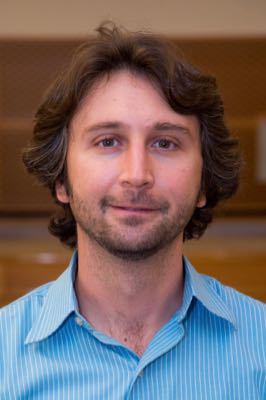
Naveen Verma is the Ralph H. and Freda I. Augustine Professor of Electrical and Computer Engineering at Princeton University, affiliated with the Andlinger Center for Energy and the Environment and the Princeton Materials Institute. His research focuses on low-power integrated circuits for emerging applications like biomedical systems, remote sensing, and in-memory computing accelerators. He leads the Verma Lab, which explores synergies between algorithms, circuits, and materials to enable pervasive intelligent systems.
Education:
- Ph.D., Massachusetts Institute of Technology (2009)
- M.Sc., Electrical Engineering, MIT (2005)
- B.A.Sc., Computer Engineering, University of British Columbia (2003)
Research Interests: His work spans ultra-low-power systems, in-memory computing architectures, large-area electronics for IoT/5G, and bio-inspired sensor systems. Key areas include analog biomedical signal processing, energy-efficient computing fabrics, and GHz-frequency circuit design using zinc-oxide TFTs.
Publications: Recent work emphasizes scalable in-memory computing macros, GHz-frequency flexible electronics, and AI-driven hardware resilience. Major contributions include energy-efficient neural network accelerators and reconfigurable antennas using large-area electronics.
Awards:
- AFOSR Young Investigator Program Award (2014)
- NSF CAREER Award (2013)
- IEEE Best Paper Awards (2015, 2016)
Advising & Labs: Directs Verma Lab, mentoring 4 current advisees. Research outputs include over 150 peer-reviewed articles and patents on LAE-based systems. Collaborates with industry partners on next-gen AI hardware and energy-efficient IoT architectures.
Lab Focus: Verma Lab pioneers hybrid systems combining CMOS and large-area electronics for applications like structural health monitoring, wearable biosensors, and wireless communication. Recent prototypes include sensing sheets for bridge damage detection and piezoelectric soft robots.