معرفی
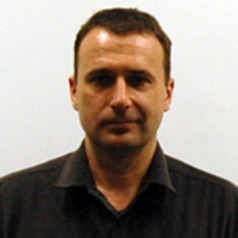
Nathan Lindquist is a Professor of Physics in the Department of Physics & Engineering at Bethel University, within the College of Arts and Sciences. He also serves as Co-Program Director of the Pietas Honors Program, demonstrating leadership beyond his research and teaching roles. His academic home is firmly rooted in interdisciplinary applied physics and engineering.
Education:
- B.S. in Physics – Bethel College, 2002
- M.S. in Physics – University of Minnesota, 2005
- Ph.D. in Electrical Engineering – University of Minnesota, 2010
Dr. Lindquist's research lies at the intersection of nanotechnology, optics, and engineering, with a strong emphasis on practical applications in biosensing, energy, and diagnostics. His work integrates plasmonics, microfluidics, and nano-fabrication to create innovative 'lab-on-a-chip' systems. He frequently employs lasers, microscopes, and molecular systems in his interdisciplinary lab, where undergraduate students are actively involved in cutting-edge research. His focus spans from fundamental nanophotonic phenomena to translational devices for healthcare and sustainability.
The 15 most recent publications reflect a consistent trajectory in plasmon-enhanced sensing, nano-optical devices, and microfluidic integration. These works span disciplines including biomedical engineering, analytical chemistry, renewable energy, and nanophotonics, highlighting the cross-cutting nature of his research. Common themes include label-free detection, low-cost fabrication, and real-time monitoring using optical methods.
Scientific Awards and Honors:
- NIH Fellowship
- NSF Honorable Mention
- University of Minnesota Doctoral Dissertation Fellowship
- NSF RUI Grant Award
- NSF TUES Grant Award
- NSF CAREER Grant Award
Dr. Lindquist has secured significant external funding, primarily from the National Science Foundation, supporting both his research and educational initiatives. He actively mentors undergraduate researchers, many of whom co-author publications and present at conferences. His lab fosters collaboration, particularly with researchers at the University of Minnesota, and emphasizes hands-on, inquiry-driven learning. Future work is likely to expand into portable diagnostic platforms and scalable nanomanufacturing techniques.
His research group, the Nanolab, operates at the forefront of applied nanophotonics, combining advanced optical techniques with microsystem engineering to solve real-world problems in health and energy.